

Meta Description: Quiet travel spots planning tips help you escape the crowds and enjoy stress-free trips. Discover 7 effective ways to find peaceful places and travel easily.
7 Smart Quiet Travel Spots Planning Tips for Stress-Free Trips
Nothing beats the feeling of arriving at a beautiful place — only to find it packed with tourists, long queues, and no hope for peace.
Sound familiar?
More travelers today are departing the crowded hotspots. Instead, they’re looking for the quietest travel destinations where they can find real relaxation, authentic culture, and a slower pace of life.
But unearthing those gems is not simply a matter of luck. It takes smart planning.
This guide shares 7 quiet travel spots planning tips to help you find peaceful destinations, avoid the tourist traps, and have a truly stress-free trip.
These tips will work for everyone — solo travelers, couples, or families.
The Appeal of Quiet Travel Spots Worth Chasing
There’s nothing wrong with busy tourist destinations, of course. But they come with a price: noise, crowds, overpriced food, and the perpetual sensation that you’re part of a moving herd.
Quiet travel locations, however, are another thing entirely.
You get to breathe. You can explore at your own pace. You engage more fully with local culture. And honestly? Your photos are better too — no strangers wandering into every frame.
There is a burgeoning market for peaceful travel.
Now let’s get into the tips.
Tip 1: Look Toward “Second Cities” Over Capital Cities
Many travelers choose a country’s most famous city as their base. Paris. Rome. Bangkok. Tokyo.
Those cities are amazing — but also incredibly crowded.
Here’s a better idea: visit the second city instead.
Every country has lesser-known cities that provide just as much history, food, and culture — with far fewer tourists.
Great Examples of “Second City” Swaps
| Instead of… | Try This Quiet Alternative |
|---|---|
| Paris, France | Lyon or Bordeaux |
| Rome, Italy | Bologna or Lecce |
| Barcelona, Spain | Valencia or Bilbao |
| Bangkok, Thailand | Chiang Rai or Khon Kaen |
| New York, USA | Pittsburgh or Buffalo |
| Kyoto, Japan | Kanazawa or Matsumoto |
These alternative cities still boast great restaurants, museums, and architecture. But you’ll stroll down the streets without having to dodge other tourists every five steps.
Local prices are lower too. Your budget goes further.
Pro tip: Type “best cities to visit in [country] besides [capital]” into a browser and watch your second-city options pop up.
Tip 2: Think Like a Local in the Off-Season Window
Timing is everything in travel.
The most packed version of any destination exists during peak travel season. The least busy version — the one locals enjoy — exists just a few weeks before or after.
This is known as the shoulder season, and it’s one of the best quiet travel spots planning tips that many travelers overlook.
What Shoulder Season Looks Like
- Fewer crowds on popular trails and beaches
- Shorter queues at museums and monuments
- Lower prices on flights and hotels
- More authentic interaction with locals
- Better odds of landing reservations at top restaurants
Shoulder Season Windows by Region
| Destination | Peak Season | Ideal Shoulder Season |
|---|---|---|
| Mediterranean Europe | June – August | April–May or September–October |
| Southeast Asia | December – February | March–April or October–November |
| Caribbean | December – April | May or October |
| Japan | March–April & Oct–Nov | June or January–February |
| New Zealand | December – February | March–April or October |
Shoulder season weather is often still great. You simply trade peak crowds for a far more mellow experience.
Quick reminder: Always check local holidays and festivals. Even in off-season periods, crowd sizes can spike around national celebrations.
Tip 3: Seek Out Destinations With Low “Tourist Density” Scores
Some places attract millions of visitors packed into a tiny space. Others disperse visitors across a broad area, creating the impression of serenity even during busy months.
When planning your next quiet trip, don’t just rely on visitor numbers. Ask: how large is the destination compared to its tourist volume?
How to Assess Tourist Density Before You Arrive
Here’s a simple mental framework:
High Density (Avoid if you want quiet):
- Small islands with major airport access
- UNESCO sites in city centers
- Instagram-famous viewpoints with easy road access
Low Density (Seek these out):
- National parks with multiple entry points
- Coastal regions with many small towns spread out
- Rural countryside areas with few direct transport links
You can also use the Google Maps “Popular Times” feature. Look up any attraction and scroll down — it displays hour-by-hour crowd levels for each day of the week. It’s free, quick, and surprisingly accurate.
Another tip: Read recent TripAdvisor or Google reviews and sort by “newest.” If visitors from the past 3 months are complaining about crowds, take that as a warning sign.
Tip 4: Let Nature Shape Your Trip, Not Landmarks
Landmarks are magnets for crowds. They exist to be visited — which means everyone goes.
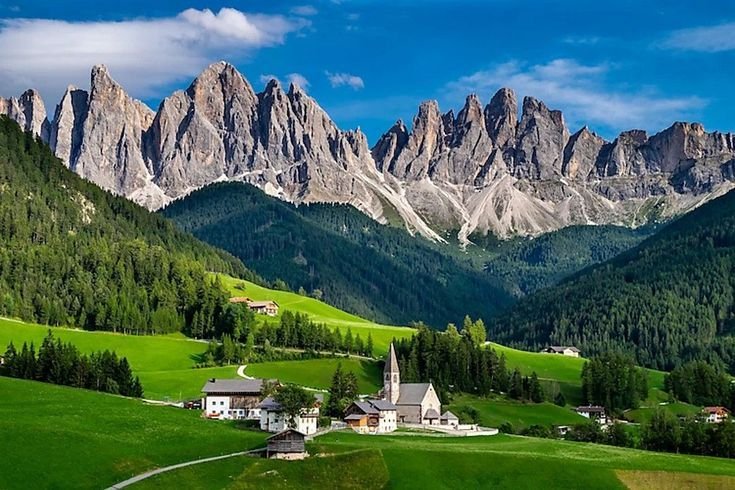
Nature, by contrast, disperses people.
A mountain trail that takes 6 hours to hike will never be as packed as a 5-minute photo stop in front of an iconic fountain. A hidden waterfall reached via a 2-hour drive down a dirt road will always feel more peaceful than a UNESCO-listed city center square.
When Planning Around Nature, Also Consider
- Slow travel regions — places designed for hiking, cycling, or kayaking at a leisurely pace
- Coastal villages rather than resort beaches
- Forest or mountain towns that aren’t famous enough to make every bucket list
If you’re looking for inspiration on exactly this kind of travel, Quiet Travel Spots is a great resource dedicated to helping travelers find and plan trips to genuinely peaceful destinations.
The experiences you’ll have in these natural spaces are usually more memorable than any landmark photo.
Tip 5: Book Accommodation Outside the Town Center
Here’s a well-kept travel planning secret that most guides fail to mention.
Where you sleep influences where you end up spending time.
If you book a hotel right in the tourist district, you’ll naturally drift toward the crowds every morning. But if you stay a bit further out — in a smaller village nearby, or on the outskirts of a town — you’ll automatically discover quieter streets, local cafés, and authentic neighborhoods.
The “10-Minute Rule” for Booking
Use this simple rule when choosing where to stay:
Pick a location at least 10–15 minutes away from the main tourist area, whether by walk, bus, or short drive.
That puts you close enough to visit the highlights when you want to — but far enough to escape the constant buzz of tour groups and souvenir shops.
Best Types of Quiet Accommodation
- Agriturismos (farm stays) — a particular favorite in Italy and Spain
- Guesthouses in residential neighborhoods — generally run by locals
- Ryokans (traditional Japanese inns) — in smaller towns away from Kyoto’s city center
- Eco-lodges — usually set in natural surroundings far from crowds
- Holiday cottages or rural rentals — via platforms like Airbnb or local booking sites
These options also tend to cost less than central tourist hotels. And breakfast is often homemade.
Tip 6: Schedule Your Visit for Weekday Mornings
Even the most popular quiet destinations can feel crowded on specific days and times.
The secret? Weekday mornings between 7 AM and 10 AM.
This window is golden. Tour buses haven’t arrived yet. Day-trippers are still eating breakfast. Most travelers don’t hit the road until mid-morning.
If you visit a famous viewpoint, beach, or old town during this window, you’ll often have it nearly all to yourself.
Another Underrated Window: Late Evenings
After 6 PM, most day-trippers and tour groups leave. You can frequently walk through old towns and historic sites in gorgeous evening light with virtually no one around.
Schedule your “big sight” visits for early morning or late evening. Use midday for eating, resting, or exploring side streets instead.
Tip 7: Use Slow Travel Platforms and Community Resources
The best quiet travel spots rarely appear on big mainstream travel blogs.
They live in niche communities, slow travel forums, and word-of-mouth recommendations from people who’ve already made the leap from busy to peaceful travel.
Here are the best places to find genuinely quiet destinations:
Online Communities Worth Bookmarking
- Slow Travel Forum (slowtrav.com) — one of the longest-running and most knowledgeable slow travel communities on the internet
- Reddit’s r/solotravel and r/travel — filter for “hidden gem” or “off the beaten path”
- Atlas Obscura — catalogs odd, wonderful, and little-traveled spots around the world
- Workaway and Worldpackers — for when you want to stay longer somewhere quiet while contributing locally
- Google Earth exploration — zoom into coastal or rural areas and look for small towns with harbors, squares, or interesting terrain. Then Google the town name.
The “One Stop Backtrack” Trick
This approach works brilliantly for rail and bus travel.
Look up the popular destination you were planning to visit. Then, on the train or bus route that serves that destination, find the station or stop just before it.
That town tends to have much of the same local architecture, food, and regional culture — but a fraction of the tourists, because it’s not the “famous” stop.
For example:
- Instead of Cinque Terre (Italy) → try Levanto or La Spezia
- Instead of Hallstatt (Austria) → try Gmunden or Bad Ischl
- Instead of Santorini (Greece) → try Folegandros or Milos
You’ll spend less and stress less, but still experience the spirit of the region.
Putting It All Together: Your Quiet Travel Planning Checklist
Run through this checklist before booking your next trip. It brings all 7 tips into one simple pre-trip routine.
- [ ] Research second-city alternatives to major tourist capitals
- [ ] Check shoulder season dates for your chosen region
- [ ] Use Google Maps “Popular Times” to assess crowd density
- [ ] Identify at least one nature-based activity to replace a landmark visit
- [ ] Book accommodation 10–15 minutes outside the main tourist hub
- [ ] Schedule key sightseeing for weekday mornings (7–10 AM)
- [ ] Browse Atlas Obscura or slow travel forums for local hidden gems
Print this out or save it to your notes app before your next trip.
Common Mistakes to Avoid When Planning Quiet Travel
Even well-meaning quiet travelers sometimes end up in surprisingly crowded spots. Here’s what to watch out for:
Mistake 1: Trusting “hidden gem” articles blindly. Once a travel blog labels a place a hidden gem, it stops being hidden. Always check how recent the article is. A “hidden gem” from 2018 may now be on every influencer’s travel list.
Mistake 2: Going during local school holidays. Even quiet towns fill up quickly when local families are on break. Check the school holiday calendar for both your home country and your destination.
Mistake 3: Choosing “quiet” destinations based on photos alone. Instagram photos don’t show the 200 people standing just outside the frame. Look for video content and recent reviews to get a more honest picture.
Mistake 4: Failing to have a backup plan. No matter how well you plan, some places prove busier than expected. Always have one or two backup quiet spots in the same region — so you can pivot without pressure.
FAQs About Quiet Travel Spots Planning
Q: What are the best quiet travel spots for solo travelers?
Solo travelers do really well in smaller cities, rural towns, and nature-based destinations. The Azores (Portugal), Hokkaido (Japan), Slovenia’s Lake Bled, and the Faroe Islands routinely score high for peace, safety, and ease of getting around solo. Visiting in shoulder season makes them even better.
Q: How do I search for genuine quiet travel destinations online?
Check out Atlas Obscura, slow travel forums, and recent travel subreddits. Zoom in visually with Google Maps and explore small towns. Search “[region] off the beaten path” or “[country] underrated destinations” — but always cross-check with recent visitor reviews.
Q: Are quiet travel destinations safe?
In general, yes — usually even more so than heavily touristed areas, where pickpocketing and tourist scams are more common. That said, always research any destination before visiting, check your government’s travel advisories, and use common-sense safety precautions regardless of crowd size.
Q: Is quiet travel cheaper than regular travel?
In most cases, yes. Less-traveled destinations tend to have lower accommodation costs, cheaper local restaurants, and fewer “tourist tax” markups on activities. Shoulder season travel also brings lower flight and hotel prices compared to peak times.
Q: What is slow travel, and how does it relate to quiet travel?
Slow travel is a philosophy of staying longer in fewer places, traveling at a leisurely pace, and connecting more deeply with local culture. It pairs naturally with quiet travel spots, as both emphasize experience over ticking off a list of sights. Many slow travelers rent apartments or guesthouses for weeks at a time, rather than rushing from city to city every day.
Q: Can families with kids enjoy quiet travel destinations?
Absolutely. Quiet destinations are usually ideal for families — less stress, more space, and more authentic experiences for kids. Nature-based destinations like national parks, farm stays, and coastal villages tend to be top choices for family travel.
Q: How far in advance should I plan a trip to a quiet destination?
It depends on the destination and time of year. For shoulder season travel, 2–4 months in advance is typically sufficient. For peak season visits to popular quiet spots like the Faroe Islands or Bhutan, book 6–12 months ahead, as accommodation options are limited.
A Final Word on Traveling Peacefully
There’s a quiet confidence in being a traveler who knows how to find peace.
You’re not chasing the same photos everyone else has. You’re not standing in the same lines. You’re sitting in a courtyard in a town most people haven’t heard of, eating the best meal you’ve had in years, with space to actually think.
At its heart, that’s what quiet travel spots planning tips are really about.
Not avoiding adventure. Not hiding from the world.
Just choosing a smarter, slower, more intentional way to experience it.
Pick one or two of these tips and apply them to your next trip. You don’t need to completely overhaul your travel style overnight. Start modestly — perhaps by selecting a second city over the capital, or booking one night in a rural guesthouse instead of a city hotel.
You’ll soon find that the road less traveled is often the better one.
Safe travels. 🌿