
Meta Description: Quiet travel destinations are perfect for slow travelers looking to get away from the hustle and bustle of the tourist scene. Find 9 places where you can slow down, breathe deep, and really connect with a place.
9 Smart Quiet Travel Spots Guides for Slow Travel Lovers
The World Is Loud. These Places Are Not.
Most travel today feels rushed. You fly in, take pictures, tick a box, and fly out.
Slow travel is the complete opposite of that.
It means staying longer. Wandering without a plan. Eating where the locals eat. Learning some phrases in the local language. Being a guest, not a tourist.
And the best part? You don’t have to go broke doing it.
A quiet travel spot is a place that hasn’t been invaded by tour buses and selfie sticks. They’re towns, villages, islands, and valleys where life moves at its own speed — and you’re welcome to move with it.
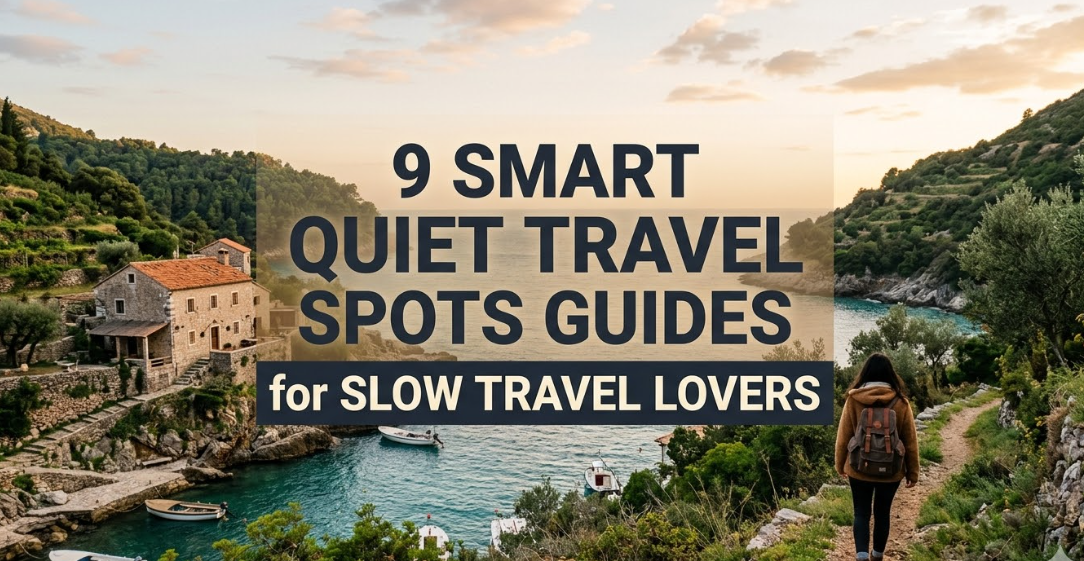
This guide looks at 9 of the world’s best quiet travel destinations for slow travelers. Each one has something unique to offer. Whether you crave mountain air, coastal calm, or deep culture, there’s a place for you here.
What Makes a Destination Right for Slow Travel?
Before we get into it, let’s clarify what we’re talking about.
A good slow travel destination has a few things in common:
- It’s not overrun with tourists
- It has low daily living costs
- There’s enough to explore for weeks, not just a day or two
- Local people are welcoming to long-term visitors
- There is beauty — natural, cultural, or both
Speed tourism skips all of that. Quiet travel spots help you discover it.
Here is a quick summary of the 9 spots we are going to cover:
| Destination | Region | Best For | Crowd Level |
|---|---|---|---|
| Plovdiv, Bulgaria | Eastern Europe | Art, history, cafe culture | Very low |
| Luang Prabang, Laos | Southeast Asia | Buddhist culture, rivers | Low |
| Faroe Islands | North Atlantic | Dramatic nature, hiking | Very low |
| Oaxaca, Mexico | Latin America | Food, crafts, color | Moderate |
| Ghent, Belgium | Western Europe | Medieval streets, canals | Low |
| Tbilisi, Georgia | Caucasus | Wine, old town, warmth | Low |
| Chiang Rai, Thailand | Southeast Asia | Temples, mountains | Very low |
| Sintra, Portugal | Southern Europe | Palaces, forests, coast | Low off-season |
| Hampi, India | South Asia | Ancient ruins, boulders | Very low |
Now let’s dive into each one.
1. Plovdiv, Bulgaria — The Best-Kept Secret in Europe
Plovdiv is one of the oldest cities in Europe. It is also one of the least busy.
This Bulgarian city lies amid hills strewn with ancient ruins. Its Old Town is a warren of cobblestone streets, multicolored houses, and Roman amphitheaters. And best of all, it lacks the tourist frenzy that besets Prague or Dubrovnik.
How Slow Travelers Fall in Love Here
Life in Plovdiv runs slow. Coffee shops stay open late. People linger for hours over a single cup of coffee.
You could spend a week there and still discover new things. The city boasts a growing arts scene, great local food, and a friendly community of long-term travelers.
Costs are very affordable. A meal costs around $4–6 USD. You pay less than $500 a month rent for an apartment.
What to Do Without Rushing
- Roam around Old Town in the morning before anyone else is out
- Visit the Ancient Roman Theater — it’s still used for concerts
- Head to the Kapana creative quarter for coffee and art galleries
- Go for a slow stroll by the Maritsa River
- Try Shopska salad and banitsa at a local bakery
Best Time to Visit
April to June and September to October are ideal. Summers are warm but not filled with tourists. Winters are cold but very peaceful.
2. Luang Prabang, Laos — Where Time Matches the River’s Flow
Luang Prabang is located where two rivers converge. Orange-robed monks line the streets. The temples shine gold in the morning light.
This tiny city in northern Laos is a UNESCO World Heritage site. But it also has a stillness, a measured energy that you won’t find in most Asian tourist centers.
The Morning Alms Tradition
Every morning at dawn, monks roam the streets in silence. Locals offer rice and food. This is known as the tak bat ceremony.
Observing this — or better yet, being a quiet participant in it — is one of the most peaceful travel experiences in the world. No rush. No noise. Just quiet devotion.
Living Slowly in Luang Prabang
The town is small, so you can walk everywhere. The food scene is great — French baguettes from colonial bakeries, fresh Lao noodle soup, and fruit shakes made to order.
You can rent a bicycle and cycle to nearby waterfalls or villages. Or simply sit along the Mekong River and watch boats float by.
Budget travelers can do fine here on $30–50 per day. Guesthouses are charming and inexpensive.
Best Time to Visit
November to February is ideal. The weather is dry and cool. The skies are clear and the rivers are beautiful.

3. The Faroe Islands — Raw, Spare, and Unforgettable
Few people are familiar with the Faroe Islands. That’s precisely what makes them ideal for slow travel.
This tiny archipelago is wedged between Norway and Iceland. It is a possession of Denmark but has its own culture, language, and character. The scenery is dreamlike — green cliffs plunge directly into dark seawater. Waterfalls tumble over the edge of the world.
A Place for People Who Care About Silence
There are 18 islands. Only about 50,000 people live here.
That means you can walk for hours without encountering another soul. You can stand at a cliff’s edge and hear nothing but wind and waves. It’s one of the last truly wild places in Europe.
Sheep outnumber people here. The grass is always green. The fog ebbs and flows like the breath of something massive.
What Slow Travelers Do Here
- Hike to Sørvágsvatn, the lake that appears to float above the ocean
- Explore the tiny village of Gásadalur, accessible only by a dramatic trail
- Discover the colorful capital, Tórshavn — the smallest capital city in the world
- Watch puffins nesting on the cliffs in summer
- Eat fresh-caught fish and traditional lamb dishes
Getting There and Costs
Flights connect via Copenhagen or Reykjavik. It’s not a budget destination — food and accommodation are pricier here. But the experience is worth it for slow travel devotees seeking genuine solitude.
Best months to visit: May through August for hiking; September for fewer visitors and moody skies.
4. Oaxaca, Mexico — A Feast of Color, Craft, and Culinary Magic
Oaxaca (pronounced wuh-HAH-kah) is perhaps Mexico’s most culturally vibrant city. It sits in the mountains of southern Mexico, far from the beach resorts.
The city is known for its food, its indigenous art, and its lively street life. It’s one of those places where you could spend a month and leave feeling like you barely scratched the surface.
Why Food Lovers Choose Oaxaca
Oaxaca is home to seven varieties of mole sauce. It has smoky mezcal distilleries. It has tlayudas, memelas, and chapulines (grasshopper tacos, if you’re feeling brave).
The food markets are vibrant with color and smell. Mercado Benito Juárez and Mercado 20 de Noviembre are two of the best. You can dine like royalty for just a few dollars.
Art, Textiles, and Village Trips
Each village around Oaxaca is known for something specific. Teotitlán del Valle makes hand-woven rugs. San Bartolo Coyotepec makes black clay pottery. San Martín Tilcajete carves wooden animals called alebrijes.
Visiting these villages is a slow travel highlight. You meet the artisans. You see how things are made. You buy directly from the maker.
Best Time to Visit
October through April is best. You’ll avoid the rainy season. November is particularly rich — it’s when Día de los Muertos celebrations fill the streets with music, marigolds, and candlelight.
5. Ghent, Belgium — The Medieval City Tourists Keep Overlooking
Everyone goes to Bruges. But Ghent is better.
That may sound like a bold claim, but slow travelers know it’s true. Ghent has medieval canals, ancient guild halls, stunning Gothic architecture, and a real city life underneath it all. It’s not just a museum town.
A City With Two Layers
The tourist layer reveals the Gravensteen Castle, the Graslei waterfront, and the magnificent Saint Bavo’s Cathedral (home to the famed Van Eyck altarpiece).
But keep looking and you discover student cafes, indie bookshops, street art, and local markets. Ghent is a university city. That gives it energy and affordability.
Slow Days in Ghent
Rent a bicycle — it’s Belgium, after all. Pedal along the canals at your own pace.
Try Belgian waffles (the authentic ones, not the touristy ones). Sip a local Ghent beer at a brown cafe with wooden benches and dim lighting.
On Sundays, head to the Friday Market for antiques, local produce, and the best people-watching in the city.
Getting Around and Budget
Ghent is compact and very walkable. It’s easy to reach by train from Brussels (only 35 minutes). Prices are reasonable for Western Europe — notably cheaper than Amsterdam or Paris.
Best time to visit: April through June and September through October.
6. Tbilisi, Georgia — Where the Wine Flows and the Welcome Is Warm
The country of Georgia (not the US state) sits between the Caucasus Mountains and the Black Sea. The capital, Tbilisi, is one of the most underrated cities on earth.
It’s also one of the most hospitable. There’s a saying in Georgia: “A guest is a gift from God.” You’ll feel that the moment you arrive.
Old Town Wandering and Sulfur Baths
Tbilisi’s old town is a warren of wooden balconies, carved doorways, and vine-covered courtyards. It feels like stepping back in time.
A favorite slow travel activity here is visiting the sulfur baths in the Abanotubani district. These are ancient bathhouses fed by natural hot springs. You rent a private room and soak for an hour. It costs almost nothing.
Georgian Food and Wine
Georgia created wine more than 8,000 years ago. The traditional method uses clay pots called qvevri, buried underground. The wines taste unlike anything you’ve had before — amber-colored, earthy, and complex.
The food is equally memorable. Khachapuri (cheese bread), khinkali (dumplings), and churchkhela (walnut candy) are just the beginning.
Budget: Tbilisi is one of the most affordable European and Caucasus capitals. You can get a fantastic restaurant meal for $5–8.
Best Time to Visit
Spring (April–June) and fall (September–October) are ideal. Summers are hot but still manageable. Winters are cold but festive.
7. Chiang Rai, Thailand — The North That Tourists Passed Over
Everyone visits Chiang Mai. Far fewer make it to Chiang Rai, just two hours north.
That’s good news for slow travelers.
Chiang Rai is smaller, quieter, and more authentic. It has world-famous temples, mountain villages, tea plantations, and golden triangle views — without the crowds of its more famous neighbor.
The Temples That Will Stop You in Your Tracks
The White Temple (Wat Rong Khun) is one of the most magnificent buildings in Southeast Asia. Pure white with mirrored glass, it glistens in the sunlight like something from another world.
The Blue Temple (Wat Rong Suea Ten) is newer but equally stunning — deep cobalt blue with gold dragons and fierce guardian statues.
You can visit both in a morning and still have the afternoon entirely free.
Life in the Slow Lane
Chiang Rai is perfect for renting a motorbike and exploring at your own pace. Head north to Mae Salong for misty mountains and Chinese-style tea shops. Visit the hill tribe villages around Doi Mae Salong with a local guide.
Or simply stay in town, find a cafe with good wifi, and let the days blend together happily.
Monthly cost for a comfortable lifestyle: around $600–900 USD. You can get an excellent Thai meal for $1.50–3.
Best Time to Visit
November to February is cool, dry, and perfect. March and April have smoke from seasonal burning. Rainy season (May–October) is lush but wet.

8. Sintra, Portugal — Palaces in the Fog
Sintra sits in the hills just 30 minutes from Lisbon. Yet it feels like another century.
The town is full of fairy-tale palaces, gothic monasteries, and romantic gardens hidden behind stone walls. Forests of oak and pine drip with moisture from the Atlantic coast.
Off-Season Is the Secret
Sintra gets crowded in summer. But visit in November, February, or March and you’ll have the paths largely to yourself.
The fog is thicker in winter. The palaces look more mysterious. Ticket lines are short. The town’s cafes are quieter and more welcoming.
Why Sintra Is Perfect for Slow Travel
- The Pena Palace: a wildly colorful hilltop castle that looks like it was painted by someone with unlimited imagination
- Quinta da Regaleira: a gothic mansion with hidden tunnels, wells, and grottos
- Monserrate Palace: a lesser-known treasure with Moorish and Indian architectural details
- The beaches at Cabo da Roca — the westernmost point of mainland Europe
Walk the forest paths between the palaces instead of the road. They weave through ancient trees, past hidden chapels, and over stone bridges.
Food, Cost, and Logistics
Sintra is best as a slow base, not a day trip. Renting a room or apartment in town for a week lets you explore thoroughly at your own pace.
Costs are moderate. Portugal is generally affordable compared to northern Europe. According to Lonely Planet’s Portugal travel guide, the country consistently ranks among Europe’s best value destinations for long-stay travelers.
9. Hampi, India — A Lost Empire Among Boulders
Nothing prepares you for Hampi.
You arrive and find yourself in the ruins of Vijayanagara, one of the greatest empires in Indian history. Temples, bazaars, elephant stables, and royal platforms — all carved from granite and scattered across a landscape of enormous boulders the size of houses.
It’s one of the most extraordinary quiet travel spots on Earth.
The Boulders, the Ruins, and the River
The Tungabhadra River curves along the edge of the ruins. Fishermen still use coracles — round wicker boats sealed with tar — to cross it.
Across the river is a hippie enclave called Virupapur Gadde. It’s quieter, greener, and separated from the main temple complex. Many slow travelers settle in for weeks.
Sunrise at the Hemakuta Hill temples is something you won’t forget. The boulders glow orange. Monkeys sit on the ruins. The bells of the Virupaksha Temple ring in the distance.
Living Slow in Hampi
Hampi has no shopping malls, no nightclubs, and no fast food chains. That’s the point.
You rent a bicycle. You wander through the ruins at your own pace. You eat at guesthouses serving rice, dal, and fresh coconut curry. You read. You sit. You watch the light change on the rocks.
It’s also extremely affordable. Food, accommodation, and bike rental together can cost $10–15 a day.
Best Time to Visit
October through February is perfect — cool, dry, and comfortable. Avoid March–May (very hot) and monsoon season (June–September, when some areas flood).
How to Select Your Ideal Quiet Travel Destination
Not every destination on this list will appeal to every traveler. Here’s a handy guide to help you decide:
| If You Want… | Go To… |
|---|---|
| Maximum affordability | Hampi, Chiang Rai, Tbilisi, or Plovdiv |
| Raw natural beauty and true solitude | The Faroe Islands |
| Food and cultural richness | Oaxaca or Luang Prabang |
| History and walkable streets | Ghent or Plovdiv |
| Fairytale landscapes and palaces | Sintra |
| Ancient ruins and spiritual energy | Hampi |
| Wine, warmth, and local character | Tbilisi |
5 Slow Travel Tips to Get the Most From Any Quiet Spot
You’ve picked a destination. Here’s how to actually travel slow.
Stay longer than you think you need to. A week feels different than a weekend. A month changes you. Give yourself enough time to stop rushing.
Skip the highlights list. You don’t have to visit every temple, museum, or viewpoint. Choose two or three things you really want to do and let everything else fall into place.
Learn five words in the local language. “Thank you,” “please,” “hello,” “delicious,” and “how much?” These five phrases will open more doors than any guidebook.
Find a regular spot. A coffee shop, a market stall, a bench by the river. Go back to the same place every day. Notice who else is there. Let familiarity build.
Leave the phone in your bag more often. This is the hardest one. But the memories that stick the most from slow travel are almost always the ones when you weren’t documenting anything.
FAQs About Quiet Travel Spots for Slow Travel Lovers
Q: What exactly is slow travel? Slow travel is about being in fewer places for longer. You spend a month in one town instead of racing through five countries in two weeks. The idea is to savor a place, rather than just checking it off a list.
Q: Are quiet travel spots safe for solo travelers? The majority of destinations on this list are very safe for solo travelers, including solo women. Plovdiv, Tbilisi, Luang Prabang, and Chiang Rai all have strong reputations for solo travel. Always do a little research before you go and trust your instincts.
Q: How long should I stay to truly experience slow travel? At least two weeks is a solid baseline. A month is ideal. Some slow travelers stay three to six months in one city. There’s no hard and fast rule — the longer you stay, the deeper the experience.
Q: Which quiet travel spots are best for digital nomads? Tbilisi, Chiang Rai, Oaxaca, and Plovdiv are among the most popular for digital nomads. They have reliable wifi, affordable long-term accommodation, coworking spaces, and active expat communities.
Q: What’s the most affordable quiet travel spot on this list? Hampi, India takes the top spot for raw affordability. You can live well on $10–15 a day. Chiang Rai and Plovdiv follow close behind.
Q: Can families travel slow to these destinations? Absolutely. Sintra, Ghent, and Oaxaca are particularly family-friendly. They have calm environments, interesting things for children to explore, and good food options. The Faroe Islands is also excellent for adventurous families.
Q: Do I need a visa for any of these places? Visa requirements depend on your passport. Citizens of many countries can visit Bulgaria, Portugal, and Belgium visa-free (EU Schengen zone). Georgia offers visa-free entry to over 90 countries. Always confirm current visa rules before booking.
Q: What should I pack for slow travel? Pack light. You’ll be living out of your bag for weeks or months. Must-haves: comfortable walking shoes, a light jacket, versatile clothing, a good book, and a reusable water bottle. Leave the bulky camera gear behind — your phone is all you need.
Final Thoughts: The World’s Quiet Corners Are Worth the Detour
There is no shortage of places in the world designed to be visited quickly. Cities with bullet-point itineraries. Bucket-list spots drowning in selfie sticks.
These 9 quiet travel spots are different.
They reward patience. They open up slowly. They ask you to put the map away and simply walk.
Whether you choose the mystical ruins of Hampi, the foggy palaces of Sintra, the warm guesthouses of Tbilisi, or the sacred mornings of Luang Prabang — you’re choosing to travel in a way that actually changes you.
Slow travel isn’t just a style of trip. It’s a way of being curious about the world.
Pick one. Stay longer. Come back different.