
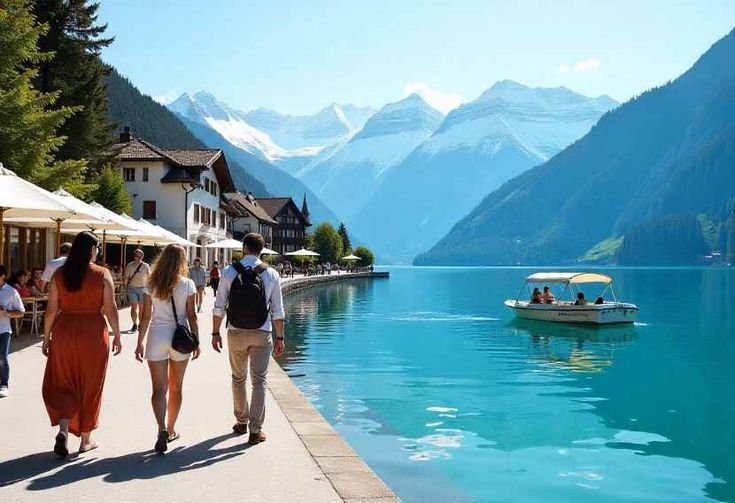
I still remember standing in the middle of the Amalfi Coast — a place I’d dreamed about for years — completely overwhelmed. Not by the beauty, but by the noise, the crowds, the tour buses, and honestly, the complete lack of any peace I had imagined. I’d done “research,” sure. I’d watched travel vlogs, saved Instagram reels, read listicles. But nobody told me how to actually find quiet there. Nobody gave me a guide that said, “Hey, here’s how to experience this place without losing your mind.”
That trip changed how I travel. Not because it was bad — parts of it were gorgeous — but because I came back home thinking: there has to be a better way to find real calm when I travel.
Turns out, there is. And it starts with the right guides.
These aren’t just “hidden gem” roundups. These are the kinds of travel resources that actually teach you how to think about quiet travel — the mindset, the timing, the tools, and the little moves that separate a stressful trip from one that feels like a reset.
Here are 9 quiet travel guides I genuinely wish had existed (or that I’d found) way earlier in my traveling life.
1. The “Off-Peak Hour” Local Guide
Most travel guides tell you where to go. Almost none of them tell you when to be there.
This was my biggest blind spot for years. I’d show up at a “quiet” beach at 11am on a Saturday and wonder why it looked like a festival. The actual locals had already left by 8am.
A good off-peak hour guide breaks destinations down by time of day, not just season. Places like Lisbon’s Alfama district, for example, feel like a completely different world at 7am versus 11am. Same cobblestones, completely different energy.
What to look for in this type of guide:
- Crowd patterns by hour, not just month
- Local breakfast and lunch timing (this affects when spots empty out)
- Which days locals tend to avoid tourist areas
One platform I’ve found genuinely useful for this is Tripadvisor’s “when to visit” breakdown, but even better is just reading recent reviews filtered by solo travelers — they tend to mention crowd levels honestly.
2. The Small-Town Slow Travel Guide
My first real “quiet travel” experience happened by accident. I missed a bus in Slovenia and ended up spending a night in a town called Škofja Loka. No plan, no booking, nothing. Just a small square, a bakery, and the sound of a river.
That accidental stop taught me more about slow travel than any guidebook had.
Small-town guides are a completely different beast from city guides. The best ones don’t try to fill your itinerary — they help you empty it. They’ll point you toward a local café that’s been open since 1963, a walking trail that isn’t on Google Maps, or a Tuesday market that’s mostly grandmothers selling vegetables.
Check out 7 Magical Quiet Travel Spots in Small Towns Worth Visiting if you want a starting point. It captures exactly this energy — places where the main attraction is just being there.
Pro tip: Search “[country] + slow travel blog” instead of “[country] + things to do.” The results are completely different.
3. The Solo Traveler’s Quiet Planning Guide
Planning a quiet trip is different when you’re traveling alone. You have more freedom, yes — but you also have no buffer when something goes wrong, and “wrong” often means ending up somewhere louder and more chaotic than expected.
The best solo quiet travel guides I’ve read focus on three things:
| Planning Element | What Quiet Travelers Need |
|---|---|
| Accommodation | Small guesthouses, family-run B&Bs, rooms away from main roads |
| Transport | Local buses and trains over tourist shuttles |
| Timing | Weekdays over weekends, shoulder season over peak |
| Backup Plans | Always have an alternative quiet café or spot listed |
I learned this after booking what was marketed as a “peaceful mountain retreat” in Nepal — it turned out to be the most popular trekking base camp in the region. Three hundred hikers, generators running at night, generators running in the morning. Loud. Very loud.
Now I always cross-reference accommodation reviews specifically for noise mentions. Search the word “quiet” in reviews before booking anything.
4. The Nature-Focused Destination Guide
If you haven’t tried building a trip around natural sound rather than landmarks, you’re missing something genuinely different.
Not national parks that everyone visits — I mean guides that take you to places where the main draw is wind through pine trees, or the sound of a waterfall you have to hike 40 minutes to reach.
The 10 Beautiful Quiet Travel Experiences for Nature Lovers guide captures this really well. It’s not about scenic viewpoints with parking lots. It’s about the kind of places where you genuinely feel removed from the noise of regular life.
For this type of trip, I’ve started using AllTrails filtered by “less visited” and cross-referencing with iNaturalist to find spots where people are observing wildlife — those places are almost always quieter because they attract a different kind of traveler.
5. The Anti-Tourist-Trap Planning Guide
This one saved me a lot of money and a lot of frustration.
Tourist traps aren’t just expensive — they’re loud. They’re designed for volume: high turnover, constant movement, noise built into the experience. The food court attached to a famous landmark. The “authentic” cultural show that seats 400 people. The boat tour that runs every 20 minutes.
A proper anti-tourist-trap guide teaches you to read the signs before you arrive:
- Does the attraction have a gift shop at the exit? (Designed for throughput)
- Is it listed on every “Top 10” list for the city? (Overcrowded by definition)
- Does it have QR-code menus and laminated photos? (Volume business)
Counterintuitive tip: the best quiet experiences are often adjacent to tourist traps. There’s a beautiful, almost-empty canal in Amsterdam about a 12-minute walk from the Anne Frank House. Most people never see it because they’re rushing to the next landmark.
6. The Seasonal Timing Deep-Dive Guide
I used to think “shoulder season” meant just avoiding summer crowds. Turns out it’s way more nuanced than that.
The best seasonal guides I’ve found break it down by type of quiet:
- Weather quiet (fewer tourists due to rain or cold)
- Cultural quiet (between local festivals and events)
- Budget quiet (when prices drop and the clientele shifts)
For example, visiting Kyoto in late November gives you stunning autumn leaves and significantly fewer crowds than early November because most tourists book for peak foliage (which is usually early). By late November, foliage is still beautiful but 30% of the tourists are gone.
This level of detail is exactly what 10 Essential Quiet Travel Planning Tricks I Wish I Knew Earlier gets into. It’s the kind of timing knowledge that genuinely shifts how you experience a destination.
Seasonal quiet travel cheat sheet:
| Destination Type | Best Quiet Window |
|---|---|
| Mediterranean beaches | Late September – early October |
| Mountain villages | Just after peak foliage / just before ski season |
| Asian temple cities | February – March (post-New Year, pre-spring break) |
| European capitals | Late January – early February |
| Tropical islands | Shoulder months between monsoon and dry season |
7. The Mindful Travel Guide (Not the Vague Kind)
Okay, I know “mindful travel” sounds like something you’d read on a wellness retreat brochure. Bear with me.
The mindful travel guides that actually helped me were the practical ones — not the ones telling me to “breathe deeply and be present,” but the ones that gave me actual frameworks for slowing down.
Things like:
- The one-thing rule: Each day, only plan one “must-do.” Let the rest happen.
- The no-phone walk: Leave your phone at the accommodation for one hour each day and just walk.
- The café anchor: Find one local café on your first day and return to it every morning. It creates a sense of belonging fast.
That last one changed every solo trip I took after I started doing it. By day two, the staff knows your order. By day three, you feel like a local. It’s a small thing, but it shifts the whole trip.
The 6 Easy Quiet Travel Experiences That Help You Slow Down guide touches on this beautifully — real, simple moves that create genuine calm rather than just a pretty Instagram backdrop.
8. The Budget Quiet Travel Guide
Here’s something nobody told me early on: quiet travel is often cheaper.
Think about it. The expensive, high-noise parts of travel are the tourist infrastructure — the rooftop bars, the food tours, the all-inclusive resorts, the “skip the line” tickets. Quiet travel, by contrast, leans on local guesthouses, public transit, markets, and slow afternoons.
Some of the most genuinely peaceful experiences I’ve had cost almost nothing:
- Sitting in a monastery courtyard in Bhutan for two hours (free)
- Taking a regional train through rural Portugal at €4 (one of the most beautiful rides of my life)
- Eating at a local lunch spot in Oaxaca, Mexico that seated eight people and cost 60 pesos
Budget guides for quiet travel are especially valuable because they remove the assumption that “peaceful” requires “expensive.” You don’t need a private villa. You need good information.
Mistakes I made before finding the right guides:
- Booking “boutique” hotels based on aesthetic photos (often noisy neighborhoods)
- Choosing central locations for convenience (always louder)
- Skipping local transport because it seemed complicated (missed the best scenery)
9. The “What Went Wrong” Honest Travel Guide
This is the rarest type, and honestly the most valuable.
Most travel content is curated positivity. Beautiful photos, highlight reels, the good stuff. Which is fine — but it doesn’t prepare you for reality.
The quiet travel guides that actually improved my trips were the ones written by people who admitted things went wrong. The guesthouse that turned out to be next to a construction site. The “secluded beach” that had five vendors selling trinkets every 20 feet. The mountain trail that was actually a paved tourist road.
Reading honest failure accounts teaches you what to check for in a way that no amount of beautiful photography can.
Look for travel blogs and guides where the author mentions:
- Specific mistakes they made at that destination
- What they’d do differently
- What surprised them (negatively)
Reddit’s travel communities (r/solotravel, r/travel, r/ThornTree) are gold for this. Real people, unfiltered opinions, no sponsorships.
A Few Common Mistakes I See Quiet Travelers Make
Even with good guides, there are some patterns I’ve watched repeat — in my own trips and in conversations with other travelers.
Over-researching the destination, under-researching the accommodation. You can find a beautiful quiet village and then stay in a hostel next to the village bar. The destination is great; your room is not. Always research the specific property, not just the area.
Confusing “off the beaten path” with “quiet.” Some of the noisiest experiences I’ve had were at supposedly undiscovered spots that had been on every travel blog for two years. “Hidden gem” has a shelf life.
Not accounting for local events. One of my “quiet” trips to a small Greek island landed right on the island’s patron saint festival. Beautiful — but not quiet. Always check local festival calendars before booking.
Forgetting that quiet is also internal. This sounds soft, but it’s real. You can be in the most serene location on earth and still feel agitated if you’re constantly checking your phone, planning the next thing, or trying to document everything. The guides help, but the mindset has to come with you.
Final Thoughts
The thing about quiet travel is that it isn’t really about finding places nobody knows about. Those places are getting harder to find, and chasing them is its own kind of exhausting.
It’s more about learning how to travel — slower, more intentionally, with better information and fewer assumptions. The guides above don’t just hand you a list of destinations. They change how you think about what a good trip actually looks like.
I started traveling for the stamps in my passport. Now I travel for that specific feeling of sitting somewhere beautiful with nowhere to be — a cup of tea, no noise, no schedule. It took me an embarrassingly long time to figure out how to reliably create that feeling.
The right guide can cut that learning curve significantly.
If you’re just starting to explore this kind of travel, a great place to begin is 10 Ultimate Quiet Travel Spots Around the World Most Tourists Miss — it’s one of the most practical starting points I’ve come across for travelers who are done with crowds and ready for something different.