

Meta Description: Travel destinations no one goes to reshaped my world view. Find 5 accidental destinations that provide tranquillity, beauty, and soul-stirring experiences to which most tourists are oblivious.
5 Experiences in Quiet Travel Places That Changed My Life and Which I Only Achieved by Getting Lost
Some of the greatest places I ever went to were off any list.
They weren’t trending on Instagram. Nobody was filming reels there. Travel bloggers hadn’t labeled them “hidden gems” yet.
I fell into each one haphazardly — a missed bus, a rain detour, an impulsive “why not?” moment. And every time, something shifted within me.
This is an article about those five quiet travel destinations. The places that didn’t just impress me — they transformed me.
Why Off-the-Grid Travel Is a Different Vibe
We live in a noisy world. Every vacation destination now seems to include a crowd, a queue, and someone recording content behind you.
However, quiet spaces have different rules.
When there’s no buzz, no agenda, no show — you’re really present. You feel the air. You notice small things. You take long enough so the place can do its thing.
These five places did that for me.
Spot 1: A Ghost Town in Northern Portugal
How I Got There (By Accident)
My bus to Porto failed halfway through the journey. The driver gestured toward a group of stone houses up a hill and said, “One hour.”
One hour turned into three days.
The village had a population of around 200. It had a bakery and a church, with a small square in the center containing a single fig tree. The Wi-Fi in the only café was awful. I didn’t care.
What Made It Life-Changing
There was a woman who baked bread every morning at 5 a.m. By 6, the smell drifted through every narrow alley.
I sat in that square every morning for three days with bad coffee and extraordinary bread. No one asked what I did for work. Nobody had a schedule. An elderly man named Adriano taught me five words in Portuguese, then we just watched pigeons together for twenty minutes.
It was one of the most serene experiences of my life — no exaggeration.
What You’ll Find Here
| Feature | Details |
|---|---|
| Best time to visit | Late spring or early autumn |
| Crowd level | Very low — mostly locals |
| Things to do | Walk the cork oak trails, visit the chapel, eat local food |
| Cost | Budget-friendly |
| Language | Portuguese (minimal English spoken) |
Why It Matters to Quiet Travelers
This kind of village — remote, unchanged, slightly inconvenient — is exactly what quiet travel spots are made of. No infrastructure is set up for outsiders. That’s the point.
You’re not a tourist there. You’re just a person passing through. And the village treats you as such.
Spot 2: A Small Island Off the Coast of South Korea
The Wrong Ferry, the Right Place
I booked the wrong ferry. I was going to Jeju — the touristy one, the famous one. I found myself on a much smaller island some 40 minutes off the south coast.
I didn’t even catch the name correctly until I was already on land.
Life at the Edges of the Sea
The island had one main road, one market, and maybe four restaurants. The fishing boats came in around 4 p.m., and for an hour afterward the whole harbor smelled like the sea.
I rented a bicycle from an elderly couple who owned the island’s only accommodation. The wife gave me a hand-drawn map. The husband warned me about one hill. He wasn’t wrong about that hill.
What Shifted for Me
I spent an afternoon sitting on a cliff staring at the horizon. Nothing moved except the water.
There were no activities to book. No landmarks with a backstory attached. Just sky and sea and a faint murmur of wind.
It occurred to me how rarely I had simply looked at something without the desire to photograph it, explain it, or share it.
That silence taught me something.
Popular vs. Quiet Island Destinations
| Factor | Popular Island (e.g., Jeju) | Small Quiet Island |
|---|---|---|
| Crowds | High (especially on weekends) | Very low |
| Cost | Moderate to high | Low |
| Activities | Organized tours, crowded beaches | Cycling, walking, fishing |
| Instagram potential | Very high | Low |
| Personal impact | Varies | Often deeply profound |
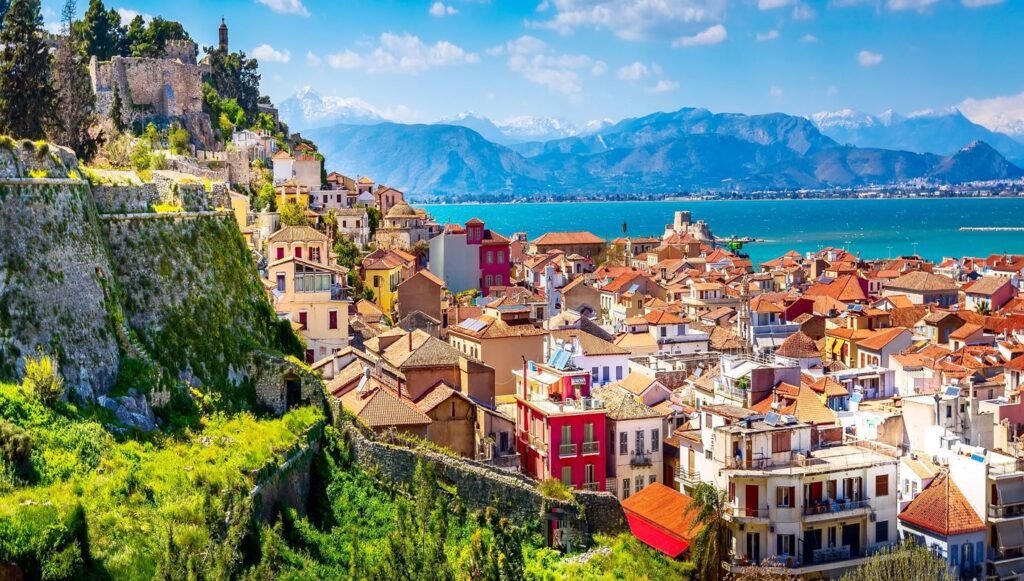
Spot 3: A Mountain Town in Northern Greece
Rain and a Closed Road
I was driving toward Thessaloniki. Rain came in hard and fast. A sign stated the main road was closed for repairs. Without really thinking, I turned onto a smaller road.
That road took me into a town nestled against the side of a mountain. Stone buildings. Cobblestone streets. A small taverna with two tables outside.
I went in for shelter. I stayed for four days.
The Taverna and the Slow Hours
The owner of the taverna — I’ll call him Kostas because I never asked his real name — made lamb stew every Thursday. The very next day was Thursday.
In less than 48 hours, I was a regular.
There was a monastery further up the hill. It was over 500 years old. One of the monks walked me through the garden, pointing out plants used for medicine and cooking. He spoke no English. I spoke no Greek. We managed completely fine.
What Quiet Travel Spots Teach You About Time
In normal tourist places, time feels scarce. You rush to see everything.
In a place like this mountain town, time pools. It gathers in the afternoons. It stretches over long meals. You begin to notice what 4 p.m. really feels like — the change in light, the dip in temperature, the sound of birds in that hour before dark.
That relationship with time is a rare thing to find elsewhere.
Traveler’s Note: What to Expect in Remote Greek Towns
- Most locals speak limited English but are incredibly welcoming
- Meals are slow — plan to sit for at least 90 minutes
- Mobile signal is often weak
- The best experiences are unplanned
- Monasteries often welcome visitors but have dress codes
Spot 4: A Jungle Town in Southern Mexico
The Bus That Went Too Far
I fell asleep on a long-distance bus in Chiapas. When I woke up, I had missed my stop.
The next town was a small jungle settlement not in my guidebook. It had a plaza, a church, and a market that took place every Sunday.
I arrived on a Saturday.
The Market Morning
I was woken by noise I hadn’t anticipated. Vendors arriving before sunrise. Cloth being laid out. The smell of copal smoke and fruit and fresh tortillas.
By 8 a.m., the market was in full swing.
There were hand-woven textiles in colors I don’t have names for. There was a woman selling medicinal herbs who drew little pictures to explain what each one did. A group of children selling handmade toys looked at me without a trace of curiosity — I was merely another person at the market.
That normality was a gift of its own.
Why This Was One of My Most Important Quiet Travel Finds
Tourist markets perform for visitors. Local markets don’t.
Everything at this market was for the people who lived there. The prices, the goods, the language, the rhythms — none of it was adjusted for an outsider. And because of that, it was completely real.
I bought a small woven bracelet for about fifty cents. I still have it.
The Emotional Geography of Accidental Places
There’s something specific that happens when you find a place by accident.
You didn’t earn it. You didn’t research it. Nobody told you to go.
That means your experience of it is entirely your own. You haven’t pre-loaded expectations. You arrive empty and the place fills you up however it wants.
That’s a rare kind of travel.
Spot 5: A Coastal Town in Sri Lanka (Off-Season)
When Everyone Else Left
I arrived in a small coastal town on the southwestern edge of Sri Lanka during the off-season. The more famous beaches on this stretch of coast get crowded during the dry months.
I was there during the rains.
Most of the guesthouses were half-empty. The beach was mostly cleared. The waves were high and dramatic. Nobody was swimming.
It was one of the most beautiful things I’ve ever seen.
The Quiet After the Season
When a tourism-dependent town goes quiet, it returns to itself.
The restaurant owners had time to sit with you. The tuk-tuk driver who took me to a temple on a rainy Tuesday offered to wait for me and then drove me back slowly, pointing out things he would never show a tourist during peak season.
I visited a small Hindu temple during an evening ceremony. I sat at the back and watched for close to an hour. The sound of the prayers, the smell of incense, the light from oil lamps — it was completely overwhelming in the best possible way.
According to Lonely Planet’s guide to slow travel, arriving in a destination without a rigid itinerary is one of the most effective ways to form genuine connections with local culture — something I experienced firsthand in Sri Lanka.
What Off-Season Travel Teaches You
| Peak Season | Off-Season | |
|---|---|---|
| Price | Higher | 30–50% lower |
| Crowds | Dense | Very low |
| Local interaction | Surface level | Much deeper |
| Authenticity | Diluted by tourism | Much higher |
| Weather | Predictable | Variable (can be dramatic) |
Why This Is My Favorite Kind of Quiet Travel Spot
It’s not that the place was empty. It’s that the place was itself.
In peak season, it performs. In off-season, it rests. And when you visit something at rest, you see what it’s really made of.
What All Five Quiet Travel Spots Had in Common
Looking back at these five places, a clear pattern emerges.
None of them were aimed at tourists. None had glossy brochures or professional tour guides. None were built for a five-star review.
They were simply places where people lived. And I happened to wander in.
Here’s what I noticed in each of them:
Slowed-down time. Without activities to tick off, hours felt longer and richer.
Real human contact. When locals aren’t in “tourism mode,” they treat you like a person, not a customer.
Sensory depth. Smells, sounds, and textures become sharper when you’re not rushing.
Unexpected meaning. Something small — a piece of bread, a hand-drawn map, a market bracelet — becomes significant.
A reset. Every single one of these places sent me home different from how I arrived.
How to Find Quiet Travel Spots on Your Own
You don’t need luck. You can cultivate these experiences deliberately.
Take the second bus, not the first. The main route goes to the main destination. The slower route often goes somewhere better.
Stay an extra day. Most travelers move too fast. The magic of quiet places usually shows up on day two or three.
Ask one question. In every new place, find one local and ask: “Where do you actually go on a day off?” The answer is almost always better than anything in a guidebook.
Go in the off-season. Shoulder seasons and off-peak months cut crowds dramatically and deepen every interaction.
Accept detours. Missed buses, bad weather, wrong turns — these are not inconveniences. They’re invitations.
A Note on Traveling Slowly
Fast travel and slow travel are not just different speeds. They’re different philosophies.
Fast travel asks: how much can I see?
Slow travel asks: how deeply can I feel one thing?
Quiet travel spots reward the second question. They have nothing to offer the first.
If you show up in one of these places with a checklist and a schedule, you’ll find it disappointing. There’s nothing to check off. There are no “must-do” activities.
But if you come with time — real, uncommitted, unhurried time — these places will give you something you genuinely cannot plan for.
FAQs About Quiet Travel Spots
Q: What exactly is a quiet travel spot? A quiet travel spot is any destination where tourism hasn’t taken over. It could be a village, a small island, an off-season coastal town, or any place where locals outnumber visitors and life continues on its own terms.
Q: Do I need to speak the local language? Not necessarily. In all five of the places I’ve described, language barriers existed — and somehow that made the interactions more meaningful, not less. Patience, a smile, and a willingness to be confused go a long way.
Q: Is it safe to travel to remote, unplanned destinations? In general, yes — especially in places with stable tourism infrastructure nearby. Common sense applies everywhere. Let someone know where you are, keep some cash handy, and stay aware of your surroundings. The quiet spots I visited were all surprisingly safe.
Q: How do I find quiet travel spots before I go? The honest answer is: you often can’t. Part of what makes them powerful is the element of accident. That said, you can increase your chances by avoiding peak season, choosing smaller towns near popular destinations, and allowing buffer days with no fixed plans.
Q: Will quiet travel spots stay quiet as more people visit? This is a real concern. Some places get “discovered” and lose what made them special. The best thing you can do is travel lightly — spend money locally, don’t litter or disrupt local customs, and resist the urge to publish exact locations on social media with high-traffic audiences.
Q: Can families or group travelers enjoy quiet spots? Absolutely. In fact, children often thrive in these environments because there are fewer structured entertainments — they have to engage with the place itself. Groups can slow down just as well as solo travelers, as long as everyone’s willing to drop the itinerary.
Q: What’s the single most important mindset shift for this kind of travel? Stop optimizing. The moment you stop trying to “get the most out of” a place, the place starts giving you things you didn’t know to ask for. That’s when quiet travel spots do their best work.
Final Thoughts: The Places That Find You
None of these five experiences were on my radar.
A broken bus. The wrong ferry. A closed road. A missed stop. An off-season gamble.
None of them were on my list — because they weren’t on anyone’s list.
And yet they’re the travel experiences I think about most. The ones that come back to me on a slow Tuesday or a restless night. The ones that feel, even now, like they contain something I haven’t fully unpacked.
That’s what quiet travel destinations do. They don’t entertain you. They don’t dazzle you with highlights.
They sit with you. Quietly. Until something in you softens enough to actually receive them.
The world is full of these places. Most of them will never be famous. That’s precisely what makes them still worth finding.
Take the wrong bus once in a while. You might end up somewhere extraordinary.