
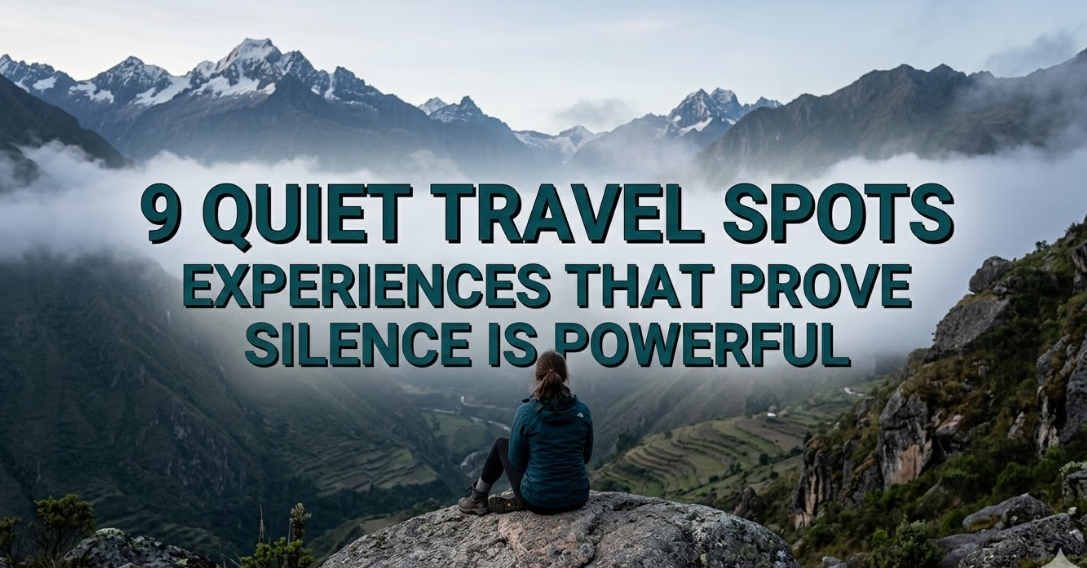
In a world that never seems to stop shouting—sirens blaring at all hours, phones pinging with endless notifications, conversations overlapping in crowded cafes—it’s easy to forget what real quiet feels like. I remember the exact moment it hit me during a trip a couple of years ago. I was standing on a windswept ridge somewhere far from any road, and for the first time in months, my own thoughts didn’t have to compete with anything else. No background hum of traffic, no distant airplanes, just the faint rustle of grass and my breathing. That silence wasn’t empty; it felt alive, almost medicinal. It slowed my racing mind, let buried ideas surface, and reminded me why so many of us chase these remote corners of the planet. Science backs it up too—studies show silence lowers cortisol levels, sharpens focus, sparks creativity, and even helps the brain grow new cells in areas tied to memory and learning. But you don’t need lab results to feel it. You just need to go somewhere where the noise of modern life fades completely, and the quiet starts doing its quiet work.
What follows are nine experiences from spots around the globe where silence isn’t just present—it’s the main event. These aren’t luxury resorts with spa playlists or guided meditation apps. They’re raw places where the absence of sound forces you to listen differently, to yourself and to the world. Each one proved to me, in its own way, that silence isn’t a void. It’s power. It strips away distractions, reveals what really matters, and leaves you changed in ways noisy adventures never could. I’ve woven in stories from my visits and those of fellow travelers because these places don’t just sit there quietly—they pull you in and make you part of their stillness. If you’re craving a reset, these spots deliver it without saying a word.
One experience that stays with me is Alsek Lake in Glacier Bay National Park, Alaska. Getting there isn’t casual—you fly into Juneau, then take a small boat or bush plane deeper into the park, leaving civilization behind like shedding an old coat. The lake stretches out under massive glaciers that calve every so often with a low thunder that feels more like the earth clearing its throat than any human racket. I arrived on a crisp September morning after a summer of back-to-back deadlines, my head still buzzing with emails and deadlines. The first night, camped on the shore with only a thin tent between me and the wilderness, I woke to nothing. Absolutely nothing. No wind that night, no birds calling, just the occasional distant crack of ice shifting. It was so still I could hear my own pulse in my ears.
That silence wrapped around me like a blanket I didn’t know I needed. Over the next few days, hiking the braided riverbeds and watching icebergs drift, I found myself replaying old conversations I’d buried, decisions I’d rushed through. Without the usual noise to drown them, those thoughts didn’t overwhelm—they clarified. One afternoon I sat on a boulder for hours, just staring at the turquoise water, and suddenly an idea for a project I’d abandoned months earlier clicked into place. Acoustic ecologists like Gordon Hempton talk about how natural quiet lets fainter sounds emerge—the flap of a raven’s wing, the lap of tiny waves—and in doing so, it tunes your inner radio too. Here at Alsek Lake, that tuning felt profound. The park’s remoteness means human sounds rarely intrude; even the rangers emphasize leaving no trace, including noise. If you go, pack light, respect the bears, and give yourself at least four or five days. The power of that silence isn’t in the scenery alone—it’s in how it forces you to sit with yourself until the real you shows up. I left lighter, more creative, convinced that true rest isn’t about sleeping more but hearing less.
Another spot that flipped my understanding of silence is the sacred forest surrounding Ise Jingu in Mie Prefecture, Japan. This isn’t some hidden cave; it’s one of the country’s most revered Shinto sites, yet the quiet there feels intentional, almost guarded by centuries of tradition. You approach along gravel paths lined with ancient cypress trees, the kind that have stood since before most countries existed. Visitors are asked to speak softly or not at all, and the result is a hush so complete it feels like the forest itself is listening. I visited during a shoulder season when crowds thinned out, and the only sounds were the soft crunch of my footsteps and the occasional whisper of wind through the leaves. No tour guides blaring facts, no cameras clicking incessantly—just reverence in motion.

What struck me most was how the silence there encouraged a kind of inner dialogue I rarely allow at home. Walking the paths toward the inner shrine, I found memories surfacing without judgment: old regrets, half-forgotten dreams. Psychologists note that silence boosts self-awareness by quieting the external chatter that usually hijacks our attention. At Ise Jingu, that process happens naturally because the site’s design—vast woodlands with minimal human interference—amplifies it. Locals told me stories of pilgrims who come for weeks, sitting in meditation until the forest’s rhythm syncs with their own. One older woman shared how her first visit years ago helped her through grief; the quiet let her feel the loss fully instead of rushing past it. Practical tip: go early morning or late afternoon, wear comfortable shoes for the long walks, and leave your phone in the locker—they discourage devices anyway. The experience proves silence’s power by turning a simple walk into a conversation with your deeper self. I emerged not just relaxed but recalibrated, carrying that forest hush back into my noisy daily life like a secret weapon.
Then there’s the otherworldly expanse of Makgadikgadi Pans in Botswana, where silence takes on a scale that’s almost intimidating. These salt flats stretch for miles in every direction, a lunar landscape of cracked white earth under an endless sky. Access involves a rugged drive from Maun or a fly-in safari, and once you’re out there, the nearest town feels like another planet. I camped on the edge during the dry season, when the pans are at their most barren, and the quiet hit like a physical force. No traffic, no insects buzzing loudly, just the faint crunch of salt underfoot and the occasional distant call of a flamingo flock migrating elsewhere. At night, the sky exploded with stars, but the ground stayed so still it was like the earth had paused breathing.
Spending days there, tracking wildlife at dawn or simply sitting with a notebook, I realized silence on this scale strips away ego. You feel small, but not insignificant—connected instead. Research from places like this shows how extended quiet reduces blood pressure and sparks problem-solving; my own mind wandered to creative solutions for work back home that I’d been stuck on for weeks. A guide once told me the pans have been a place of reflection for local communities for generations, where disputes are settled not by shouting but by shared stillness. The power comes from the vastness: without walls or schedules, your thoughts expand to fill the space. To visit responsibly, join a small-group operator who knows the fragile ecosystem, bring plenty of water, and plan for the heat. Makgadikgadi doesn’t whisper its lessons—it lets the absence of sound roar them into you. I drove away feeling expanded, like the silence had carved out room inside me for bigger ideas.
Far north, Lake Inari in Finnish Lapland offers a different flavor of quiet—one wrapped in ice and northern lights. Reached by train from Helsinki then a bus or rental car to the lake’s edge, the area feels like the end of the world in the best way. In winter, the lake freezes solid, and the surrounding forests muffle everything. I stayed in a small cabin during the polar night period, when daylight is scarce and human activity even scarcer. The silence there isn’t total void; it’s punctuated by subtle natural notes—the crack of expanding ice, the soft whoosh of wind across snow—but mostly it’s a deep, enveloping hush that makes every sound feel precious.
One evening I stepped outside under the aurora, and the quiet amplified the magic. No planes overhead, no distant music from bars—just me and the sky dancing silently. That experience highlighted silence’s role in mindfulness; without auditory distractions, your senses heighten, and presence becomes effortless. Travelers I met spoke of how the lake’s stillness helped them process burnout, one even quitting a toxic job after a week of reflection there. The science aligns—quiet environments improve sleep quality and emotional regulation. For a visit, book a glass igloo or lakeside cabin, layer up heavily, and embrace the darkness. The power of silence at Inari lies in its endurance; it holds you through long nights until clarity emerges like the first hint of dawn. I returned home with a calmer nervous system and a new habit of seeking pockets of that same stillness daily.
The dramatic cliffs of Kallur Lighthouse on Kalsoy in the Faroe Islands deliver silence with a side of breathtaking drama. Ferries and buses get you there from Tórshavn, but once on the island, a steep hike to the lighthouse leaves most crowds behind. The path hugs green hills dropping into the Atlantic, and at the top, the wind sometimes dies down to a whisper, leaving only seabird calls and the faint crash of waves far below. I hiked it on a clear summer day when tourism was light, and the quiet settled in like an old friend. No engines, no chatter—just the crunch of boots on grass and my own thoughts keeping pace.
What proved silence’s power here was the contrast. The Faroes are rugged and wild, yet that lighthouse spot invites introspection amid the vastness. I sat for hours watching puffins dive, and suddenly old family tensions I’d carried for years felt solvable, not overwhelming. Quiet like this fosters perspective, as studies on nature immersion confirm, lowering anxiety by giving the brain space to reframe. Locals share tales of sailors who found peace in these isolated spots after stormy voyages. To experience it fully, wear sturdy boots, check weather for fog, and go solo or with one companion to preserve the hush. The silence at Kallur doesn’t just soothe—it empowers you to face life’s cliffs with steadier footing. Leaving, I felt more resilient, the quiet having built something sturdy inside.
Over in New Zealand, Lake Takapō in the Mackenzie District turns silence into a canvas for the stars. The area’s dark sky reserve status means light pollution is virtually nonexistent, and the lake’s remote shores—accessed by car from Christchurch or a short flight—offer spots where you can camp or stay in eco-lodges with minimal disturbance. I arrived during a new moon phase, set up a blanket by the water, and the quiet enveloped everything. No distant hum of highways, just the gentle lap of waves and the occasional sheep bell from far hills.
That night, lying back under billions of stars, the silence made the universe feel intimate. Without noise to anchor me to earthly worries, my mind drifted to gratitude and big-picture questions I usually ignore. The power here is how silence pairs with darkness to spark wonder and creativity—research links both to reduced stress and enhanced problem-solving. Fellow stargazers I chatted with (quietly, of course) described breakthroughs in their personal lives after similar nights. Visit in autumn for fewer people, bring a telescope if you’re keen, and respect the reserve rules. Takapō’s silence proves its strength by turning an ordinary evening into a profound reset, leaving you aligned with something larger than daily grind.
Maui’s Haleakala Crater in Hawaii absorbs sound in a way that feels almost supernatural. Drive up the winding road to the summit at dawn or hike into the crater floor, and the dormant volcano’s vast bowl creates natural acoustics that swallow echoes. The thin air and barren landscape mean few creatures or plants add noise; it’s mostly your footsteps on volcanic sand and the rare call of a nene goose. I hiked down one sunrise, the crowds thinning as I descended, and by midday in the crater’s heart, the quiet was absolute. No wind that day, just a profound stillness that made every breath audible.

There, silence became a mirror. Thoughts I’d avoided—career doubts, relationship patterns—rose without distraction, demanding honest attention. The crater’s isolation amplifies this, much like quiet parks certified by movements preserving natural soundscapes. Hikers often emerge transformed, reporting heightened intuition and lower anxiety. The experience showed me silence’s power to heal by forcing confrontation in a safe, beautiful space. Go prepared with water and layers for temperature shifts, start early to beat heat, and stay on trails. Haleakala doesn’t preach—it simply holds space until you hear what you need.
India’s Rann of Kutch salt desert offers silence on a canvas of white that stretches to the horizon. Accessible by road from Bhuj during the dry season (avoid monsoon), the great Rann feels like stepping onto another planet. I joined a small group for a night under the stars, and once the jeeps left, the quiet descended like a curtain. No villages nearby, just endless cracked salt, the faint crunch underfoot, and maybe a distant camel bell carried on the wind.
Days wandering the flats, I felt the silence peeling away layers of urban stress. Without constant input, creativity flowed—I sketched ideas that later became real projects. The vastness teaches patience and presence, benefits echoed in studies on desert solitude boosting self-control and spirituality. Local herders value this quiet for reflection, passing stories of clarity found in its emptiness. To visit sustainably, choose eco-operators, carry your own waste out, and embrace the heat with hydration. Rann of Kutch proves silence powerful by making you confront infinity without flinching, emerging more grounded and open.
Finally, Spain’s Arribes del Duero along the river canyons between Spain and Portugal brings seasonal silence that shifts with the land. Hike the trails or kayak the Duero, and in off-season—spring or autumn—the cliffs and vineyards create pockets where human sounds fade. I kayaked a quiet stretch one fall day, the only noise the paddle dipping and birds overhead. The canyons’ geography muffles everything, leaving room for the river’s murmur and your inner voice.
That paddle clarified a major life choice I’d been agonizing over; the silence acted like a sounding board. The area’s low population density preserves this, much like emerging quiet trails worldwide. Visitors often note reduced mental fatigue and fresh perspectives. Plan a multi-day trek or boat trip, pack binoculars for wildlife, and go midweek. Arribes del Duero shows silence’s power through its gentle persistence—it doesn’t shout answers but lets them rise naturally.
These nine spots, scattered across continents, share one truth: silence isn’t passive. It’s an active force that rebuilds what noise erodes—focus, creativity, emotional balance, connection. In each, I left carrying less baggage and more clarity, proof that stepping away from the din isn’t escape but return. If life feels too loud lately, pick one, pack light, and let the quiet do its work. You’ll hear things you didn’t know you needed, and the power of that will stay with you long after the sounds of the world rush back in. The real adventure begins when everything else falls silent.