
There’s something about chasing quiet that changes you as a traveler. Not the kind of quiet you find in a luxury resort where the staff whispers and the infinity pool is empty because the rates keep everyone else away. I mean the real, earned quiet—places where the only sounds are wind through pine needles or the distant call of a bird you can’t name, spots so unadvertised that you feel like you’re the first person in years to stand there without a selfie stick in hand.
I’ve been chasing that feeling for over fifteen years now, ever since I ditched the backpacker hostels in Southeast Asia and started wondering why every “hidden gem” blog post led me straight into another crowd of influencers. Overtourism isn’t new, but after the pandemic it got worse in the places everyone already knew. Santorini, Machu Picchu, Bali’s rice terraces—they became stages. I wanted stages without an audience. That’s when I started collecting tools that actually delivered secret locations instead of recycled top-ten lists. Not influencers with affiliate links. Not glossy coffee-table books that sit on shelves. Real guides—some digital, some community-driven, some quietly official—that hand you coordinates or stories or local names and then get out of the way.
These five have become my quiet-travel bible. They don’t promise five-star hotels or perfect Instagram light. They promise the opposite: the chance to disappear for a few days without disappearing from the map entirely. I’ve used them in Europe, Asia, the Americas, even on a last-minute weekend in my own country when I needed to remember why I fell in love with travel in the first place. Each one works differently, but together they form a system. One shows you the weird and wonderful. Another puts locals in charge. A third curates entire underrated regions. The fourth taps into an international effort to protect rural life. The fifth feels like a personal scout who already did the legwork.
I’ll walk you through how I found each, how they work in practice, the specific secret spots they’ve unlocked for me, and the small tricks I’ve learned to squeeze the most silence out of them. If you’re tired of shoulder-to-shoulder photo ops and ready for places where the only line is the one you draw in the dirt with your boot, these are the guides that will get you there.
The first one I ever fell hard for is Atlas Obscura. I stumbled across it in 2012 on a clunky laptop in a guesthouse in Lisbon, back when the site was still mostly a quirky list of oddities. Today it’s grown into a database of more than twenty-four thousand places, but the spirit hasn’t changed: it collects the strange, the forgotten, the deliberately overlooked. You won’t find the Eiffel Tower here. You will find a tree in New Orleans wired with wind chimes that play a secret melody when the breeze hits just right—the Singing Oak. Or a cave in Philadelphia where America’s first doomsday cult waited for the world to end in 1700. Or a tiny shrine in Tokyo run entirely by vending machines. These aren’t loud attractions; they’re quiet punctuation marks on the landscape.
What makes Atlas Obscura special for quiet travel is the way it rewards curiosity instead of popularity. The search bar lets you filter by “abandoned,” “nature,” “underground,” or simply “weird.” The mobile app is even better because it works offline once you save a place. I once downloaded a cluster of entries for rural Pennsylvania before a solo road trip and ended up at Camp No-Be-Bo-Sco, the actual scout camp where they filmed the original Friday the 13th. No tourists, just me and a caretaker who let me sit on the dock for an hour listening to loons. The place felt like it had been waiting.
The community aspect is the secret sauce. Anyone can submit a place, and the editors fact-check with a light touch. That means you get stories that feel human—someone’s grandmother telling them about a hidden hot spring in Tuscany, or a hiker who found an old railway tunnel in the Scottish Highlands that locals use as a shelter during rain. I’ve contributed two myself: a nameless spring in the Atlas Mountains outside Marrakech where Berber women still wash wool the old way, and a roadside chapel in the Azores that only opens when the priest rides his donkey up from the village once a month. Both are still listed, and both are still quiet because the guide never turns them into must-sees.
To use it well, I start broad. Type the region I’m heading to and add “quiet” or “hike” or “abandoned” in the search. Then I cross-reference with satellite view on Google Maps to make sure there’s no parking lot the size of a football field. The best finds come when you read the full story first. The description of the Ludolph van Ceulen Memorial in Leiden—a small plaque in a church honoring the man who spent his life calculating pi to thirty-five digits—made me drive two hours out of my way. I arrived at dusk, the church empty except for one old woman lighting a candle. We nodded, said nothing, and I left feeling like I’d borrowed a moment from another century.
Atlas Obscura taught me that secret locations aren’t always remote. Sometimes they’re hiding in plain sight inside busy cities. The Rig Museum in Morgan City, Louisiana, lets you walk onto an actual offshore oil platform that’s been turned into a museum. Most visitors to New Orleans never know it exists. I spent an entire afternoon there with only the wind and the creak of metal for company.
The downside? Not every entry is updated, and some “secret” spots have grown since they were added. That’s why I always check recent comments. The upside? The app’s “near me” function has saved me more than once on layovers. Stuck in Atlanta for six hours? There’s a hidden Civil War cemetery ten minutes from the airport that feels like stepping into a Southern ghost story.
After Atlas Obscura rewired how I looked at maps, I found Spotted by Locals and it felt like upgrading from a treasure map to having a friend who already lives there. The concept is simple but revolutionary: every city guide is written by actual residents—503 of them across eighty-six cities at last count. These aren’t professional travel writers. They’re architects, teachers, baristas, retirees who love their hometowns enough to share the corners they actually use.
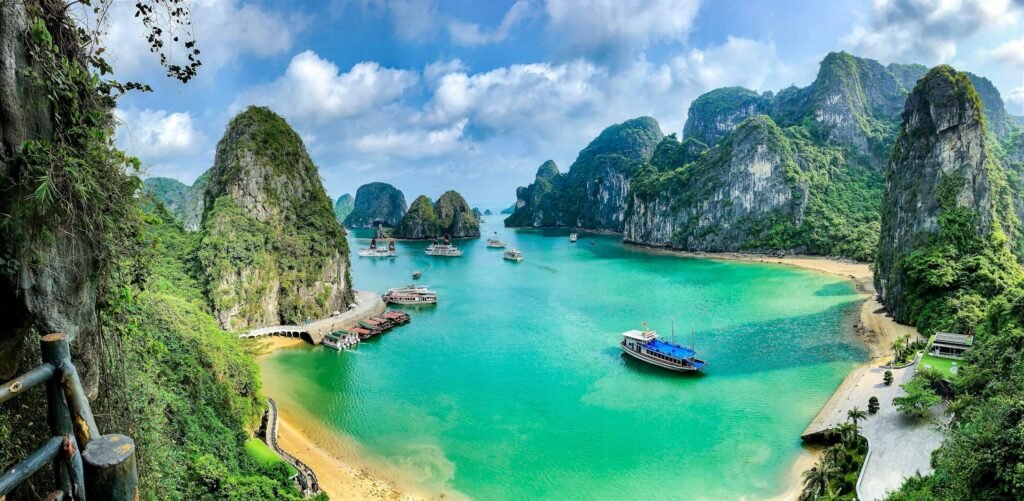
I first tried it in Rotterdam because a friend swore the local spotters knew the quietest cafés along the canals. The guide cost me less than ten euros for full access, and it paid for itself the first afternoon. Instead of fighting crowds at the Erasmus Bridge, I followed a tip to a tiny bookshop café called FARM—Feast Against Routine Meals—tucked inside an old factory building. The owner recognized the Spotted by Locals logo on my phone and brought me a plate of homemade bread without me asking. We talked about nothing important for forty minutes. That’s the quiet I mean: conversation without agenda.
Each city guide is broken into categories—food, nature, culture, hidden spots—and every entry comes with the spotter’s name and a short bio. You can message them through the app if you’re polite. I did that once in Athens and ended up spending an evening at the Electric Railways Museum with the spotter who listed it. The place is literally hidden behind a chain-link fence in a noisy neighborhood, but inside it’s all vintage trains and silence except for the occasional pigeon. We sat on a bench eating gyros he brought from a place tourists never find.
Spotted by Locals shines for urban quiet. Cities are loud by nature, but these guides know the pockets where the volume drops. In London, H. J. Aris—an antique shop that doubles as a bistro—lets you sip cocktails surrounded by dusty chandeliers and no background music. In Munich, Umi Udon has a back terrace where the only sound is the clink of chopsticks. The spotters emphasize sustainability too; they’ll tell you which places are struggling because of overtourism and which need your business.
The app is dead simple. Download the city pack, turn on location, and it shows you nearby spots with walking times. I keep it open like a second brain when I’m wandering. Last year in Tallinn I used it to find a tiny park on the edge of the old town where Estonian grandmothers still play chess under linden trees. No tour groups, just the click of pieces and the smell of rain on leaves.
What I love most is the tone. These aren’t sales pitches. One spotter in Porto wrote, “This viewpoint is nothing special on paper, but if you go at golden hour when the ferries are quiet, you’ll understand why I proposed to my wife here.” I went. He was right. I sat there alone for twenty minutes and felt the city exhale.
The only real drawback is coverage—eighty-six cities is impressive but leaves gaps. For smaller towns I combine it with the next guide on my list. But for any major destination where noise is the enemy, Spotted by Locals is my first download.
After a few years of city-hopping with locals, I started craving bigger landscapes—whole regions that felt forgotten. That’s when Hidden Gem Guide became my constant companion. It’s not an app; it’s a website that feels like the blog your well-traveled aunt would write if she had infinite time and zero interest in sponsorships. The focus is unapologetically on places mainstream tourism has skipped: secret European towns, hidden beaches, underrated countries, cycling routes that don’t appear in any glossy magazine.
The collections alone are worth bookmarking. There’s one with fourteen hidden-gem beaches that includes a black-sand cove in the Penghu Islands where basalt columns rise like dragon spines and the only footprints are yours. Another lists eleven overlooked countries—Bosnia, Georgia, Taiwan—complete with two-week itineraries that avoid the capital cities entirely. I followed the Bosnia guide last autumn and spent nine days driving mountain roads where the biggest decision was whether to stop at the roadside stand selling homemade rakija or keep going to the next medieval village.
What sets Hidden Gem Guide apart is the depth. Each itinerary includes local bus numbers, small family-run guesthouses, and warnings about which “Instagram spots” have become crowded lately. The cycling collections are gold for quiet travel; I once rented a bike in South Korea and followed their East Coast Trail route for four days, sleeping in minbak guesthouses where the owners cooked whatever they pulled from the garden that morning. The only sounds at night were cicadas and the occasional distant train.
I use it differently from the others. Before any trip I scroll the interactive map, drop pins on places that match my mood—beach for restoration, mountains for perspective—and then read the full guide. The writing feels personal, like someone who has actually been rained on in Gran Canaria and still thinks it’s magic. They’ll tell you which Azores island is best if you want zero crowds (São Miguel’s lesser-known north coast) and which Sicilian back roads still have wildflowers in June.
One of my favorite discoveries came from their “secret European towns” list: a village in Slovakia called Banská Štiavnica that most people skip for Bratislava. I arrived by train, checked into a guesthouse run by a former miner, and spent three days hiking trails where the only other hikers were locals picking mushrooms. The town’s medieval core is quiet even in summer because the big tour buses can’t navigate the narrow streets.
The site updates slowly but thoughtfully. New collections appear every few months, and the comments section is full of readers sharing their own tweaks—“the bakery mentioned closed on Mondays now, but the one two streets over makes better strudel.” That community feedback keeps it alive.
If Atlas Obscura is the quirky explorer and Spotted by Locals is the insider friend, Hidden Gem Guide is the patient researcher who has already done the boring work of comparing bus schedules so you don’t have to. Together they cover cities and countryside beautifully.
Just when I thought I had every angle covered, I read about the UN Tourism Villages database in a magazine and it felt like the missing piece for truly untouched quiet. It’s not flashy. There’s no sleek app or influencer partnerships. It’s an official list of 254 rural villages across fifty-two countries that have been recognized for preserving their culture, environment, and community while gently opening to respectful visitors.
The database lives on a simple website where you filter by country or region and click through to each village’s page. What makes it powerful is the criteria: these places aren’t chosen because they have the best marketing. They’re chosen because they score high on cultural preservation, environmental sustainability, and social stability. In other words, they’re the ones governments are actively trying to protect from becoming the next overcrowded hotspot.
I started with Italy because I wanted thermal springs without the bus crowds. San Casciano dei Bagni popped up—a medieval hill town of about sixteen hundred people in Tuscany. The village page linked straight to the local tourism board, which pointed me to family-run agriturismos and guided walks through the hot springs that have been used since Roman times. I booked a week in October and had entire thermal pools to myself at dawn. The only other guests were a couple from Milan who whispered the entire time, as if loud voices might break the spell.
Vietnam gave me Trà Quế Vegetable Village, a five-hundred-year-old farming community where families still grow herbs the way their ancestors did. No hotels, just homestays. I helped plant rice one morning—not because the guide told me to, but because the host invited me and it felt rude to say no. By afternoon I was sitting on a bamboo platform watching egrets land in the fields, the only sound the rustle of leaves.
Patagonia delivered Trevelin, an Argentine village surrounded by tulip fields and vineyards. The database entry mentioned kayaking on a nearby lake that most foreigners never hear about. I rented a kayak from a guy whose family has lived there since Welsh settlers arrived in the 1800s. We paddled in silence for three hours, startling only a few geese.
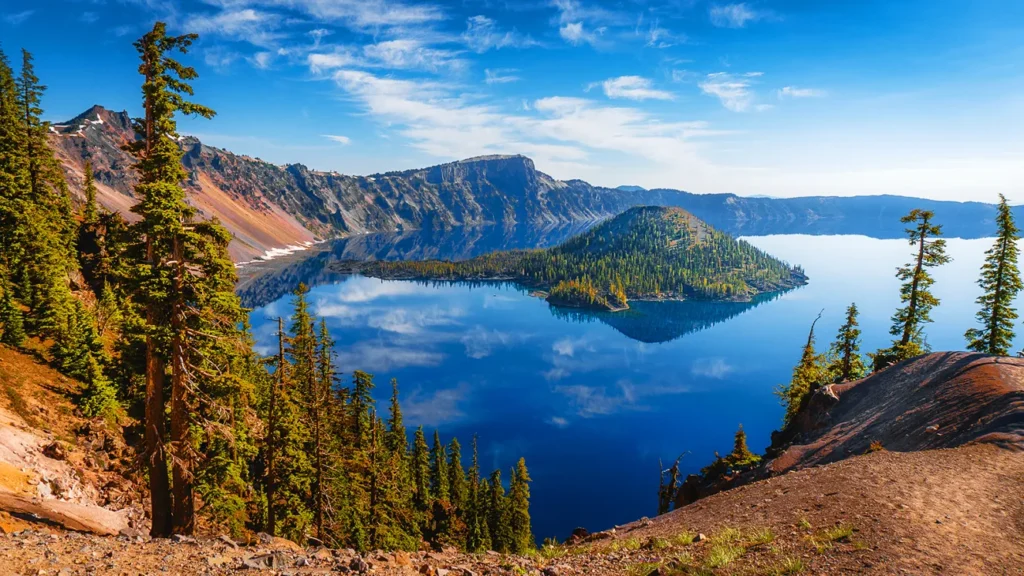
Portugal’s Castelo Rodrigo and Spain’s Alquézar both made the list for their castles and rock art, but the real draw is the pace. In Alquézar I hiked a canyon trail where the only company was the echo of my own footsteps and the occasional goat herder waving from a distance.
The beauty of this guide is its built-in ethics. Because the villages are officially recognized for sustainable tourism, the locals are usually eager but cautious. They want visitors, but they want the right ones. I’ve learned to arrive with small gifts—coffee from my home country, a children’s book in the local language—and to ask before taking photos. The quiet comes naturally when you respect the rhythm.
The database isn’t perfect. Some villages have limited English on their linked sites, and transportation can be tricky. I always pair it with Rome2Rio for bus routes and then use Hidden Gem Guide for detailed itineraries once I narrow the country. But for pure escape, nothing beats pulling up a village you’ve never heard of and realizing you can spend a week there without once seeing a tour group flag.
The fifth and final piece of my system is TripScout, the app that feels like having a local expert who never sleeps. It’s designed around curated guides and personalized recommendations, pulling from both expert writers and community input to surface quiet beaches, hidden restaurants, and backroads that don’t show up on standard maps.
I downloaded it on a whim before a trip to the Philippines and immediately found a route through Bohol that skipped the famous Chocolate Hills crowds in favor of smaller karst formations and empty mangrove tunnels. The app suggested a homestay on a tiny island where the owner paddled us out at sunrise to watch dolphins—only three other people on the entire boat. That’s the level of specificity TripScout delivers.
The interface is clean. You tell it your interests—hiking, food, solitude, photography—and it builds day-by-day plans or simply drops pins for “near me” discoveries. I love the way it layers information: a hidden beach will show photos from real users, estimated crowd levels (based on recent check-ins), and even tide schedules. One entry in Colombia pointed me to a coffee finca in the hills above Salento where the owner only accepts visitors who book through the app because he refuses big groups. I drank coffee that tasted like chocolate and listened to hummingbirds for two hours straight.
TripScout excels at connecting the dots between the other guides. I’ll find a village in the UN database, then search TripScout for “nearby quiet activities” and suddenly have a perfect half-day hike or a market only locals use. In Japan it led me to a tiny onsen in the mountains outside Kyoto that Atlas Obscura had listed but without practical directions; TripScout gave me the exact bus number and a note that the owner speaks only Japanese but loves showing guests his garden.
The app’s offline mode is reliable, and the community feels genuine—no paid reviews, just travelers swapping tips. I’ve left my own notes on a quiet viewpoint in Georgia and come back months later to find someone had added a better trail to the same spot.
What I appreciate most is the quiet-travel filter. You can explicitly search for “low crowd” or “peaceful” and the results lean toward places where the experience matters more than the postcard. It’s the perfect closer for any trip planning session.
Using all five together has become my ritual. I start with Hidden Gem Guide or the UN database to pick a region that feels under-the-radar. Atlas Obscura fills in the quirky stops. Spotted by Locals handles any cities along the way. TripScout builds the daily flow and logistics. The result is trips where I spend more time listening than talking, more time still than moving.
A few practical lessons I’ve picked up. First, always cross-check recent reviews; even the best guides can’t keep up with everything. Second, travel shoulder season whenever possible—late September in Europe, early May in Asia. Third, bring paper backups. Phone batteries die and reception disappears exactly when you need it most. Fourth, practice “leave no trace plus one”: pick up one piece of litter that isn’t yours. The locals notice and it keeps these places secret longer.
Quiet travel isn’t about bragging rights. It’s about permission—to slow down, to notice small things, to let a place change you instead of you changing it for the next visitor. These five guides have given me that permission more times than I can count. They’ve led me to a singing tree in Louisiana, a railway museum in Athens, a vegetable village in Vietnam, a tulip field in Patagonia, and countless unnamed springs and trails I’ll never share publicly because some secrets deserve to stay that way.
If you’re ready to trade crowded piazzas for empty benches and influencer hotspots for personal discoveries, start with any one of them. But try all five eventually. They work like a team, quietly pointing the way to places the world hasn’t ruined yet. The silence you find there isn’t empty. It’s full of everything you’ve been missing.