
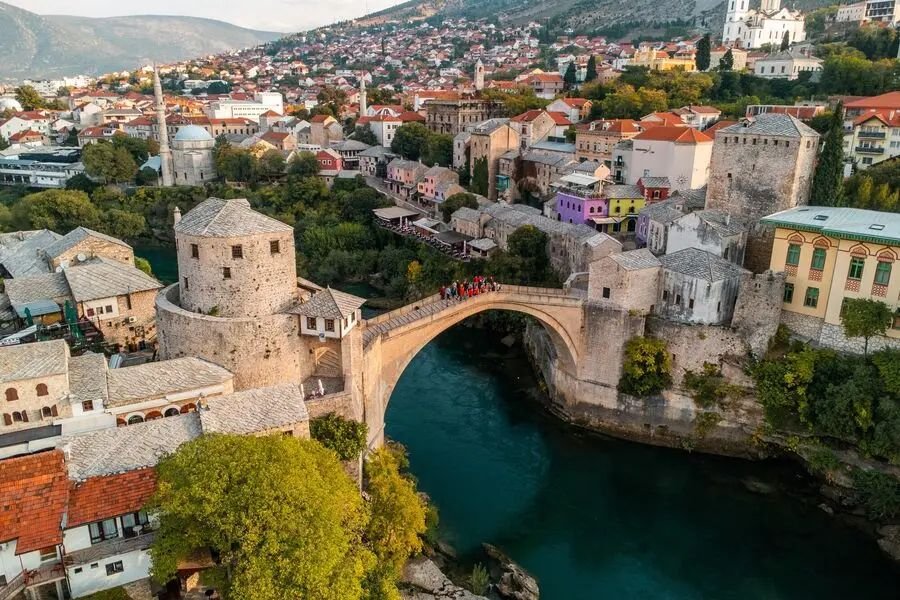
Last spring, I showed up to a “charming coastal village” I’d bookmarked for months — only to find it packed shoulder-to-shoulder with day-trippers, selfie sticks everywhere, and a 45-minute queue for a mediocre gelato. I stood there thinking: I did everything right. I researched. I planned. What went wrong?
That trip was my breaking point. I started obsessing over how to actually travel quietly — not just finding quiet places, but traveling in a quieter, smarter way. Less friction. Less money wasted. Less noise, literal and figurative.
Over the next year and a half, through a mix of trial, error, and some genuinely embarrassing mistakes, I figured out a system. These nine hacks didn’t come from a blog list — they came from real trips where I got things wrong first.
1. The “Shoulder of the Shoulder” Season Trick
Everyone knows about shoulder season. Travel in April instead of July. Cool, noted, moving on. But here’s what nobody tells you: the first and last week of shoulder season are still crowded because everyone else read the same travel blog you did.
The real sweet spot? I call it the shoulder of the shoulder — the second or third week after the main season ends, or the week before the crowd thinks shoulder season begins.
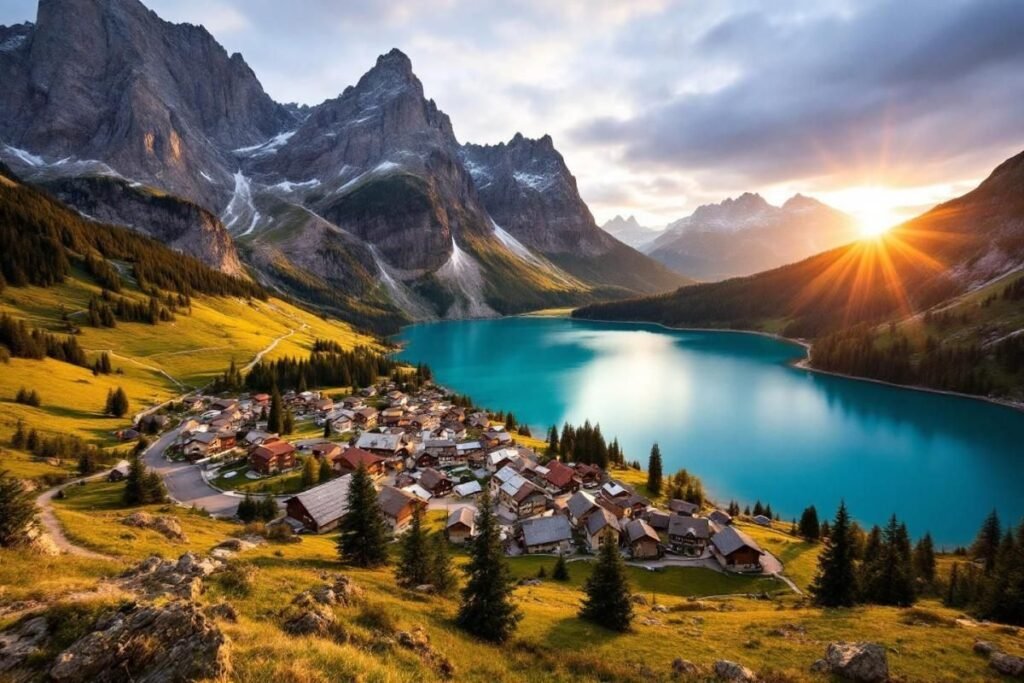
For example, I visited the Dolomites in late September instead of early September. Hotels were 35% cheaper, trails were genuinely quiet, and the autumn color was hitting peak. The difference was unreal.
How to find your window:
- Check Google Trends for “[destination] travel” and look for when search interest starts dropping — that’s your signal
- Look at school holiday calendars for the country you’re visiting, not just your home country
- Ask small guesthouses directly: “When do you feel the shift in crowds?” They always know
2. Stop Booking the “Top Rated” Accommodation
This one hurt my pride a little because I used to be a reviews fanatic. But I noticed something: the top-rated places on Booking.com or Airbnb are top-rated because everyone books them, which means they’re never actually quiet.
I started doing something different. I filter for places with between 15 and 50 reviews, ratings above 4.2, and I specifically read the negative reviews — not to avoid the place, but to see if the complaints are things I actually care about.
“Too quiet, nothing to do nearby” in a negative review? That’s a five-star recommendation for me.
I also started booking family-run guesthouses through direct contact. Found a woman in Umbria who rented two rooms in her stone farmhouse. It didn’t exist on any platform. I found her through a forum post from 2019. Cheapest, most peaceful sleep of my life.
3. Train Over Plane — But Not for the Reason You Think
I used to choose trains purely for environmental guilt. Now I choose them because trains drop you in city centers, and that alone changes the entire energy of arriving somewhere.
When you fly into a major airport, you’re already stressed before you’ve seen the destination. Baggage claim, transfers, that horrible fluorescent limbo. By the time you reach your accommodation, you’ve used up half your calm.
Trains are different. You watch the landscape change. You’re in the rhythm of the place before you arrive. And for quiet travel specifically — connecting to a place slowly matters.
Practically speaking, for European trips under 4-5 hours, trains are often cheaper than flying once you factor in airport transfers, checked baggage, and the two hours you burn getting there early. I use Trainline or the national rail apps directly (Trenitalia, DB, RENFE) for better prices.
One mistake I made early on: booking train tickets the same way I booked flights — last minute for “deals.” Trains in Europe work the opposite way. Book 60-90 days ahead for the best quiet-travel pricing.
4. The Two-Base Strategy (This Saved Me More Money Than Anything Else)
For longer trips, I used to move every 2-3 days. New city, new hotel, pack, unpack, find coffee, orient myself, repeat. It sounds adventurous. It’s actually exhausting and expensive.
Now I pick two bases for a 10-day trip and do day trips from each.
Here’s what this actually saves:
| Old Approach (Moving Every 2-3 Days) | Two-Base Approach |
|---|---|
| 4-5 accommodation bookings | 2 bookings |
| Luggage storage fees | None |
| Multiple transfer costs | Reduced significantly |
| Constant reorientation stress | Settle in, then explore |
| Less negotiating power with hosts | Can ask for weekly discount |
When I tried this in Portugal — one base in the Alentejo region, one near the Minho — I saved roughly €180 compared to my usual hopping approach, and I actually felt like I lived somewhere briefly rather than just passing through.
For quiet travellers especially, settling in matters. You find the good bakery on day two. You know which path is quieter by day three. That knowledge has real value.
5. Eat Where There’s No English Menu Outside
This sounds like a food tip. It’s actually a money and crowd-avoidance tip.
Restaurants that put English translations on their exterior menus (or have pictures of food) are optimized for tourist turnover. They’re priced for it too. The moment I started walking an extra two or three streets away from the main square and sitting down somewhere with a handwritten menu I couldn’t fully read, everything improved. Food was better. Bill was smaller. Room was quieter.
I use Google Translate’s camera function to read menus in real time. It’s not perfect — I once ordered something that turned out to be tripe — but that’s part of it.
A practical rule: if you can hear a staff member giving a rehearsed spiel in your language before you’ve even sat down, keep walking.
6. Offline Maps Are Non-Negotiable (And Here’s How I Use Them)
I can’t count how many times I’ve seen someone standing on a cobblestone street, phone raised, rotating themselves trying to find signal. It breaks the whole atmosphere of a quiet place and wastes ten minutes.
Maps.me and Google Maps offline (you can download entire regions) have completely changed how I move through places. I download the region before I leave the hotel each morning, and I navigate without needing data.
But here’s the less obvious part: I use offline maps to pre-mark places I want to check out — not as a rigid itinerary, but as a gentle layer of awareness. Quiet church on this street. Viewpoint up that hill. Local market two blocks east. I discover them when I wander near them, rather than searching on the fly.
This approach pairs beautifully with the kind of slow, peaceful travel described in guides focused on 7 Secret Quiet Travel Spots in Europe That Feel Like Hidden Worlds — places you’d miss entirely if you were heads-down in your phone searching for them.
7. The “Arrive Sunday, Leave Wednesday” Pricing Pattern
I stumbled onto this by accident when I had a work deadline push my trip. I ended up arriving on a Sunday and leaving mid-week — and my accommodation cost noticeably less than the exact same property for a Friday-to-Monday weekend booking.
I started testing it deliberately. The pattern held almost everywhere:
- Weekend arrivals (Thursday night through Sunday) = peak pricing at most leisure destinations
- Sunday arrivals through Wednesday departures = consistently 15-30% cheaper at many guesthouses and smaller hotels
This isn’t a secret the industry hides — it’s just not something that comes up unless you play around with dates manually. Most booking platforms default to showing you popular travel windows. Slide those dates around yourself.
Also: Tuesday flights are reliably cheaper than any other day for most European routes. I don’t always have flexibility, but when I do, that single change has saved me €40-70 per flight consistently.
8. Pack the “Quiet Kit” — It’s Smaller Than You Think
This sounds absurd until you’ve used it. My quiet kit fits in a small zip pouch and has saved trips from becoming miserable:
- Loop earplugs (not the foam ones — these reduce volume without muffling, so you’re not isolated, just turned down)
- A lightweight sleep mask — the kind that doesn’t press on your eyes
- A small white noise app (I use “Noizio”) downloaded for offline use
- A physical notebook — not for journaling necessarily, but because writing by hand slows my brain down in a way no app replicates
The earplugs alone changed my experience at busy transit hubs. I still hear announcements, still hear if someone talks to me, but the constant low-level roar drops away. It’s a genuinely underrated travel item.
On the accommodation side: I always request a room facing away from the street, even in quiet guesthouses. It costs nothing to ask and about 70% of the time they can accommodate it.
9. Build in a “Nothing Day” and Protect It
The most expensive mistake in quiet travel isn’t a bad hotel or a wrong train. It’s over-scheduling and then feeling like the trip failed because you were exhausted.
I used to build itineraries that were secretly just logistics spreadsheets with sightseeing labels. Day three: Cathedral 9am, Market 11am, Vineyard 2pm, Dinner reservation 7pm. By day four I hated myself and my trip.
Now I build in one full day per five days of travel where nothing is planned. No bookings. No “should see.” Just the place, however it presents itself that morning.
These days always end up being the ones I remember most. The afternoon I found a tiny library in a hill town in Tuscany and sat reading for two hours. The morning I followed a cat down a lane in a Portuguese village and ended up at a viewpoint nobody seemed to know about.
You can’t schedule that. But you can schedule the space for it.
For first-time slow travellers who want to build this habit from the start, the practical guide on 9 Easy Quiet Travel Spots Planning Ideas for First-Time Travelers covers the mindset shift really well — especially around resisting the urge to fill every hour.
Common Mistakes I Still See (And Made Myself)
Over-researching to the point of disappointment. When you’ve watched 14 YouTube videos about a place, you’ve already mentally visited it. The real thing can only underwhelm. I now research enough to get there safely and find accommodation — then stop.
Booking refundable everything “just in case” and then not changing anything. If you have a refundable booking, you’re less committed to the trip. I know this sounds odd, but non-refundable bookings made me actually show up to places I might have lazily cancelled. Commitment creates experience.
Assuming quieter means cheaper. Sometimes it does. Sometimes a genuinely off-the-path place has one guesthouse that charges whatever it likes because there’s no competition. Research the accommodation situation before you fall in love with a remote destination.
Taking the picture before you’ve actually looked. I catch myself doing this. Phone comes out before I’ve even properly seen the thing in front of me. I started making it a rule: look first, stand still for 30 seconds, then decide if I want a photo. Usually the answer is yes, but at least I saw it first.
A Note on Tools I Actually Use
For anyone wanting to systematize some of this:
- Skyscanner with “Whole Month” view for flexible date searching
- Rome2Rio for mapping out all transport options between two points (often reveals cheaper, slower options I wouldn’t have thought of)
- Workaway or Worldpackers if you ever want to exchange a few hours of help for free accommodation — completely changes your budget math
- TripAdvisor filters set to “hidden gems” and sorted by lowest number of reviews — counterintuitive but effective
The combination of the two-base strategy, shoulder-of-the-shoulder timing, and protecting at least one nothing day has cut my travel costs by somewhere between 25-40% compared to my first few years of doing this, with trips that feel significantly less depleting.
Quiet travel isn’t really about finding empty places (though that helps). It’s about moving through the world with less resistance — less financial, less logistical, less emotional. Most of these hacks don’t require any special knowledge or budget. They just require being slightly more deliberate than average.
And if you’re just getting started with building this kind of travel approach, it’s worth reading about 10 Underrated Quiet Travel Spots You Should Visit Before Everyone Else — because strategy only works when you have good destinations to point it at.
Also worth reading: 5 Peaceful Quiet Travel Spots That Completely Reset My Mind — a solid reminder of why we bother finding the quiet in the first place.