
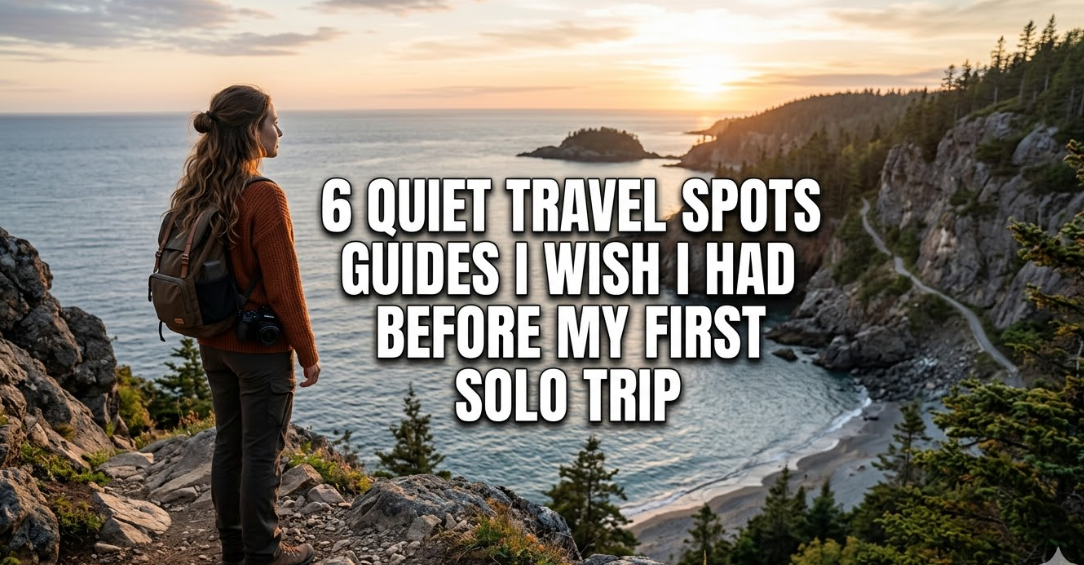
Meta Description: Quiet travel spots guides are what every solo traveler needs. Discover 6 peaceful destinations with tips, tools, and insights to help you explore the world confidently and calmly.
6 Quiet Travel Spots Guides I Wish I Had Before My First Solo Trip
There’s a moment every solo traveler knows. You’ve just arrived somewhere new. Your bag is heavy, your phone has a low battery, and the city sounds louder than you imagined. You open up a map app and find it directing you to the most packed street in the neighborhood.
That moment is precisely why guides to quiet travel spots exist.
On my first solo trip, I spent hours reading generic travel blogs about “must-see” places. None of them gave me directions for where to go when I needed silence. None of them told me about the peak tourist hours. And none really made me feel comfortable.
This guide is what I wish I had. It spans six gentle places worldwide, all provided with frank tips, practical comparisons, and down-to-earth details that show you how to travel not just faster — but smarter.
Why Low-Impact Travel May Matter More Than You Think
The busier tourist sights are fun for about fifteen minutes. Then the noise sets in.
Crowds make it harder to think. Crowded places zap your energy quickly. And when you are on the road alone, your mental energy is your key asset.
Quiet travel isn’t about being antisocial. It’s about picking places where you can actually breathe, take in your surroundings, and connect to where you are — without having to elbow your way through a crowd to do so.
According to research by the Global Wellness Institute, “slow travel” — traveling to less crowded and commercialized destinations, for example — is significantly associated with greater traveler well-being and satisfaction with a trip. People who visit quieter places feel more rested, focused, and more connected to the local culture.
Quiet places are also more affordable, more authentic, and far more memorable.
The 6 Quiet Travel Spots Guides You Really Need
The following spots were selected for their low tourist footprint, natural tranquility, solo-traveler friendliness, and general accessibility. Whether you have one week or one month at your disposal, these places offer something unique: true peace.
1. Matera, Italy — Stone-Cut Silence in the South
The majority travel to either Rome, Florence, or Venice. Hardly anyone thinks about Matera.
That’s exactly the point.
Matera is among the oldest continuously inhabited cities on the planet. It is carved into a ravine in southern Italy, rich with cave dwellings known as sassi that date back thousands of years. It was designated a World Heritage Site by UNESCO. But measured against its northern Italian tourist counterparts, Matera is a whisper.
Why Matera Is an Ideal Place for Solo Travelers
Strolling through Matera’s narrow stone alleyways is like stepping into the past. No big tour groups here. The streets are narrow and winding, designed for foot traffic — not buses.
You’ll find:
- Cave hotels (alberghi diffusi) dug into the rock — often less than $70 a night
- Local restaurants serving Lucanian cuisine with few English-language menus — a good sign
- A near-meditative quietude after 8 PM, when day-trippers have departed
Arrivals should aim for late October through early December, or March through April. Summer brings more visitors, but the city never gets as frantic as northern Italy.
Practical Tips for Matera
To reach Matera, take a train to Bari and then a local train or bus 1.5 hours south. This extra step is literally what keeps the crowds away — and it becomes part of the adventure.
Mobile data works fine. Hotel staff and some restaurant employees speak English.
Budget overall: €50–80 per day including accommodation, food, and activities.
2. Luang Prabang, Laos — Where Mornings Still Belong to Monks
Southeast Asia has become increasingly popular. Thailand’s islands are packed. In July, Bali can feel like a theme park.
But Luang Prabang is different.
This small city in northern Laos is located where the Mekong and Nam Khan rivers meet. It’s placed amid mountains, temples, and waterfalls. And every single morning, just before sunrise, Buddhist monks walk quietly through the streets collecting offerings — a tradition known as tak bat that dates back centuries.
The Pace of Life Here Is the Destination
Luang Prabang is not about entertaining you. It just exists, beautifully and quietly, while you slow down to keep pace with it.
The city has no skyscrapers. Motorbike traffic is light. Most guesthouses are small family-run enterprises tucked behind garden walls.
Key experiences:
- Observing the morning alms ceremony (from a respectful distance — participating as a tourist requires coaching)
- Renting a bike and riding through bamboo forest to Kuang Si Waterfalls
- Sitting on a guesthouse terrace as the sun sinks behind the Mekong
Is Luang Prabang Becoming Too Popular?
The honest answer: it’s growing. But there are still far fewer tourists than in Chiang Mai or Hoi An. The town has strict building regulations restricting development, which helps.
Go now. And go slowly.
Best months: November to February (cool and dry). Avoid April — it’s Lao New Year, incredibly busy and also incredibly fun, depending on your preference.
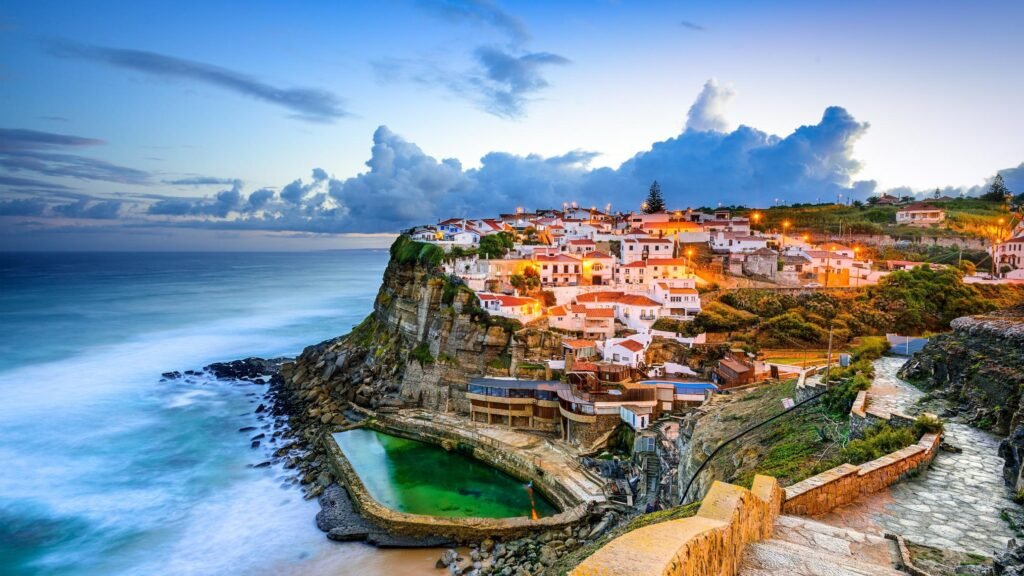
3. The Faroe Islands — Fog, Cliffs, and Almost No One Else
If you’ve ever longed to stand on a cliff and feel like the last person on Earth, the Faroe Islands were made for you.
This autonomous archipelago lying between Norway and Iceland is home to only 54,000 residents. There are no big resort hotels, no beach clubs, and hardly any traffic outside the capital Tórshavn.
What it does have: dramatic sea cliffs, waterfalls that plunge straight into the ocean, turf-roofed villages, and a sky that shifts every ten minutes.
Solo Traveler Logistics in the Faroes
Getting around is possible by renting a car or using the local bus-and-ferry system. The majority of solo travelers choose a rental car — being able to pull over and stand in a field is half the experience.
Accommodation ranges from small guesthouses and farm stays to a few boutique hotels. Prices are on the high side — allow about $120–160 a day — but there is little in the way of tourist “trapping.” Locals are genuinely friendly and accustomed to independent travelers.
The Weather Situation (Be Honest With Yourself)
The Faroes experience a lot of fog, rain, and wind. That’s not a bug — that’s a feature.
Part of what makes the place feel otherworldly is the mist rolling over the cliffs. But you must pack for it: waterproof jacket, waterproof boots, and warm layers even in summer.
Best months: June through August for the longest daylight. September offers fewer tourists and dramatic autumn light.
4. Oaxaca, Mexico — Color, Craft, and Mountain Calm
Oaxaca sits in a high valley in southern Mexico, about 5,000 feet above sea level. The elevation keeps temperatures cool and pleasant year-round. The five-hour drive or forty-five minute flight from Mexico City keeps tourism numbers manageable.
It is one of the most culturally rich cities in Mexico — and it’s not nearly as loud or frantic as Cancún or Los Cabos.
What Oaxaca Gives Solo Travelers
Oaxaca is the kind of place where you could disappear for two weeks and still not exhaust everything to discover. But more than anything, you can fade out of noise and pressure and simply be.
The city center (Centro Histórico) is walkable. Most streets are cobblestoned and lined with brightly painted colonial buildings. The food scene is extraordinary — mole, tlayudas, mezcal — and few restaurants feel rushed or crowded outside of major holidays.
Day trips from Oaxaca include:
- Monte Albán, an ancient Zapotec city on a flattened mountaintop with stunning valley views and virtually no visitors compared to Chichen Itza
- Hierve el Agua, a network of petrified waterfalls and natural infinity pools
- Weaving and pottery villages less than 30 minutes from the city center
Safety and Solo Traveler Reality Check
The city of Oaxaca is widely considered one of Mexico’s safer destinations. The streets are well-lit, locals are welcoming, and a mix of domestic Mexican tourists — not only foreigners — creates a more authentic, less commodified atmosphere.
More research is needed for the state of Oaxaca outside the city center. Stick to well-traveled routes.
5. Kanazawa, Japan — The Kyoto That Tourists Forgot
Japan has a problem: Kyoto is so famous it can feel like Tokyo with temples. Lines at Fushimi Inari start before dawn. The Arashiyama bamboo grove is a river of selfie sticks.
Kanazawa solves that problem completely.
Located on Japan’s western coast along the Sea of Japan, Kanazawa was one of only a handful of Japanese cities not bombed during World War II. It survived intact, meaning its geisha districts, samurai neighborhoods, and traditional arts scene are genuine — not reconstructed.
Kenroku-en and the Quiet Japanese Garden Experience
Kenroku-en is consistently rated one of Japan’s three great gardens. On weekdays in spring and autumn, you can walk through it with almost no one around you.
That would be impossible in Kyoto.
Kanazawa also has:
- The 21st Century Museum of Contemporary Art, which manages to feel peaceful despite being world-class
- The Higashi Chaya geisha district, which at dusk feels like walking into a woodblock print
- Fresh seafood from the Omicho Market at prices well below those in Tokyo
Getting the Timing Right in Kanazawa
The Hokuriku Shinkansen now connects Tokyo to Kanazawa in about 2.5 hours, which has boosted visitor numbers slightly. Even so, it remains dramatically quieter than Kyoto or Osaka.
Best visited on weekdays. Cherry blossom season (late March to mid-April) and autumn foliage (mid-October to mid-November) are both stunning and still manageable crowd-wise.
6. Salta, Argentina — The Andean North That Most Tourists Skip
Most international travelers who visit Argentina head straight to Buenos Aires. A few make it to Patagonia. Almost nobody goes to Salta.
That is a genuine shame — and also a genuine opportunity for whoever does.
Salta is the capital of northwestern Argentina, perched at about 3,900 feet at the edge of the Andes. It is called “La Linda” — the beautiful one — and the name is deserved. The city has handsome Spanish colonial architecture, a relaxed pace of life, and access to some of the most jaw-dropping landscapes in South America.
The Landscapes Around Salta Are Unreal
Within a few hours of Salta, you can reach:
- The Quebrada de Humahuaca, a dramatic canyon valley of layered colored rock that shifts hues by the hour
- The salt flats of Salinas Grandes, a blinding white expanse at 12,000 feet
- The cloud forests and colonial wine towns of the Calchaquí Valley
These places receive a tiny fraction of the visitors that Uyuni in Bolivia or Torres del Paine in Patagonia attract. You can stand in landscapes that feel genuinely unspoiled.
Solo Travel Practicalities in Salta
Spanish is essential here. English speakers are rare beyond the tourist hotels in the city center. But a little Spanish goes a long way — and the locals in Argentina’s northwest are among the most welcoming and patient you’ll find anywhere.
Public buses connect Salta to most major nearby towns cheaply and reliably. Budget travelers can manage on $25–40 per day including accommodation in quality hostels and local restaurant meals.
The best wine region day trip from Salta is Cafayate — a 3-hour bus ride through canyons, arriving in a small town set amid high-altitude Torrontés vineyards. Almost nobody outside Argentina knows about it.

How to Actually Find Quiet Travel Spots Before You Book
The biggest challenge is not visiting quiet destinations — it’s discovering them in the first place. The bulk of travel content is driven by affiliate marketing and sponsored partnerships, which means the same popular places get covered endlessly.
Here’s a practical approach to finding genuinely quiet spots. You can also explore a growing collection of off-the-beaten-path destination breakdowns at Quiet Travel Spots, where the focus is always on peaceful, crowd-free travel.
Use These Research Methods Before Any Trip
Start with “second cities.” Every country has a famous city and a quieter one. Find the quieter one. Ask locals online — Reddit’s travel communities and country-specific forums are often more honest than travel blogs.
Look at tourism statistics. The UNWTO (World Tourism Organization) publishes annual data on international arrivals by destination. High-arrival countries don’t always have high-arrival cities. Find the country’s famous city, then search for somewhere nearby that isn’t on the list.
Check the infrastructure. Quiet locations tend to have fewer direct flights, no cruise ship docks, and limited chain hotels. These limitations are features, not bugs. They filter out a certain kind of traveler and keep the atmosphere more local.
Use off-season timing strategically. Many moderate-popularity destinations become genuinely quiet in their shoulder season. A place that’s “medium crowded” in July might be virtually empty in November and still perfectly pleasant weather-wise.
Packing and Mindset: How to Actually Enjoy Quiet Places
Finding a quiet destination is step one. Arriving there ready to enjoy it is step two.
Many travelers arrive at tranquil places and instantly fill the silence with content consumption — earbuds in, phone out, scrolling through what everyone else is doing back home. This completely defeats the purpose.
The Solo Traveler’s Quiet Mindset Checklist
Before any quiet trip, it helps to set a few simple intentions:
One offline hour per day. Choose one hour — typically morning or after dinner — when the phone stays in your bag. You’ll notice things you would have missed: a certain quality of light, a conversation between two locals, the sound of a city winding down for the night.
Write something small every day. It doesn’t have to be a journal. Even three sentences about what surprised you keeps your observations sharp and your memory clearer.
Eat where locals eat. This sounds obvious, but many travelers default to places with familiar menus and recognizable food. Quiet destinations reward culinary courage. Follow your nose and look for plastic chairs and handwritten menus.
Walk before you plan. On your first morning in any new quiet destination, walk for an hour with no destination. No Google Maps, no route planned. You will almost always find something better than whatever you were going to look up.
Quiet vs. Popular: A Realistic Comparison
There’s no perfect destination. Every quiet spot has trade-offs. Here’s an honest look at what you gain and give up.
| What You Gain | What You Sometimes Give Up |
|---|---|
| Calm, unhurried pace | Fewer English speakers |
| Lower prices | Less tourist infrastructure |
| Authentic local culture | Fewer direct transport options |
| Better photos with no crowds | Limited opening hours at attractions |
| Feeling of genuine discovery | Less restaurant variety |
| Stronger sense of safety and space | Harder to find certain foods |
After their first quiet trip, most solo travelers discover they prefer the left column overwhelmingly. As you get used to slow travel, the trade-offs shrink.
FAQs About Quiet Travel Spots Guides
Q: Are quiet travel spots safe for solo travelers, especially women?
Safety depends more on the specific destination and your behavior than on whether a place is quiet or popular. Many quiet spots are safer than their crowded counterparts simply because there are fewer opportunities for tourist-targeting scams. Always research the specific safety context of any destination before traveling. The solo female travel community on Reddit’s r/solotravel offers specific, honest, and up-to-date advice from real travelers.
Q: How do I know if a “quiet” destination is actually quiet or just poorly served?
Look at what’s missing rather than what’s present. A genuinely quiet destination will have local restaurants, local transportation, and a local economy that doesn’t depend on tourism. If the only businesses catering to tourists are basic guesthouses and a few cafes, that’s a good sign. If you find nothing aimed at travelers at all, that may mean the infrastructure isn’t there to support a comfortable visit.
Q: What’s the best time of year to visit any of these quiet travel spots?
Each destination has its own ideal window, covered in each section above. As a general rule, shoulder season — the one to two months on either side of peak season — offers the best balance of good weather, reasonable prices, and thinner crowds. Avoid major local holidays unless you specifically want to experience them.
Q: Can I combine multiple quiet spots on one trip?
Yes, but be careful about distance and logistics. Combining Matera with a visit to other parts of southern Italy is easy. Combining the Faroe Islands with Kanazawa in a single trip requires careful planning and more time. A good rule: connect quiet destinations only if you can do it without rushing. Rushing through a quiet place defeats the purpose.
Q: What apps or tools help with quiet travel planning?
A few genuinely useful ones: Wikivoyage for unsponsored destination research, Maps.me for offline maps, Google Translate’s camera feature for navigating non-English menus, and the Seat61 website (seat61.com) for planning train journeys in destinations where overland travel beats flying.
Q: Is quiet travel more expensive than visiting popular destinations?
It varies significantly. Both Luang Prabang and Salta are on the affordable end of their regions. The Faroe Islands are genuinely expensive. By Western European standards, Matera is affordable. On the whole, quiet places tend to offer better value because their local economies haven’t been inflated by mass tourism.
The Trip You’ll Actually Remember
Years from now, you won’t remember the airport queue in Cancún. You won’t remember fighting through crowds at a famous landmark to take the same photo as eleven million other people.
You will remember the morning in Luang Prabang when the monks walked past you in silence and the whole city smelled like incense. You’ll remember standing alone on a Faroese cliff with the wind pushing hard against you. You’ll remember the cave hotel in Matera, carved into rock that people have lived in for eight thousand years.
Quiet travel spots guides aren’t just about finding places with fewer tourists. They’re about finding places where you can actually be present. Where travel becomes an experience instead of a performance.
These six destinations are a starting point. The world has dozens more. The trick is knowing what to look for — and now you do.
Your first solo trip to a quiet place will be one of the best decisions you’ve ever made. Take it slowly. Take it seriously. And don’t wear your earbuds for more than one hour a day.
Heading to a specific place from this list? Leave a question in the comments and receive personalized travel advice.